


Blog

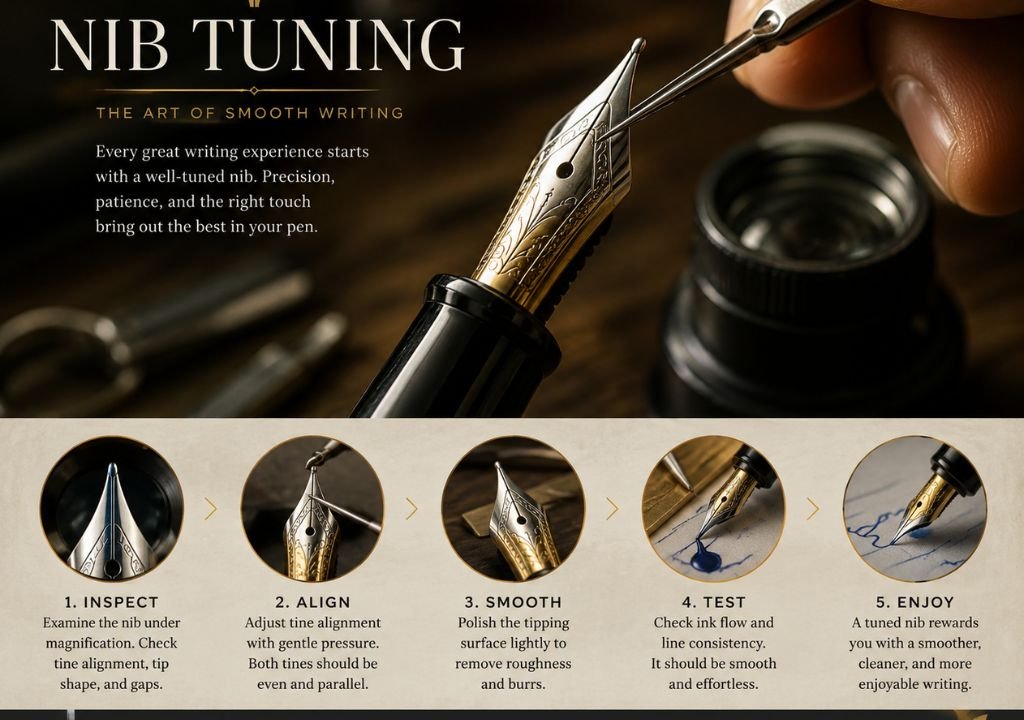
Fountain Pen Nib Tuning: The Complete Guide to Smoother Writing, Better Ink Flow & Professional Nib Adjustment
Fountain pens are revered for their elegance, smooth writing experience, and personalized touch. However, even the finest fountain pens may require tuning to achieve optimal performance. Proper nib adjustment and maintenance can significantly enhance ink flow, improve writing comfort, and elevate your overall penmanship. This comprehensive guide aims to demystify the art of fountain pen nib tuning, providing detailed insights into techniques that ensure smoother writing, better ink flow, and professional-level adjustments. Whether you are a seasoned enthusiast or a novice eager to refine your skills, understanding how to tune your nib is essential for unlocking your pen’s full potential.
Understanding the Fundamentals of Fountain Pen Nibs
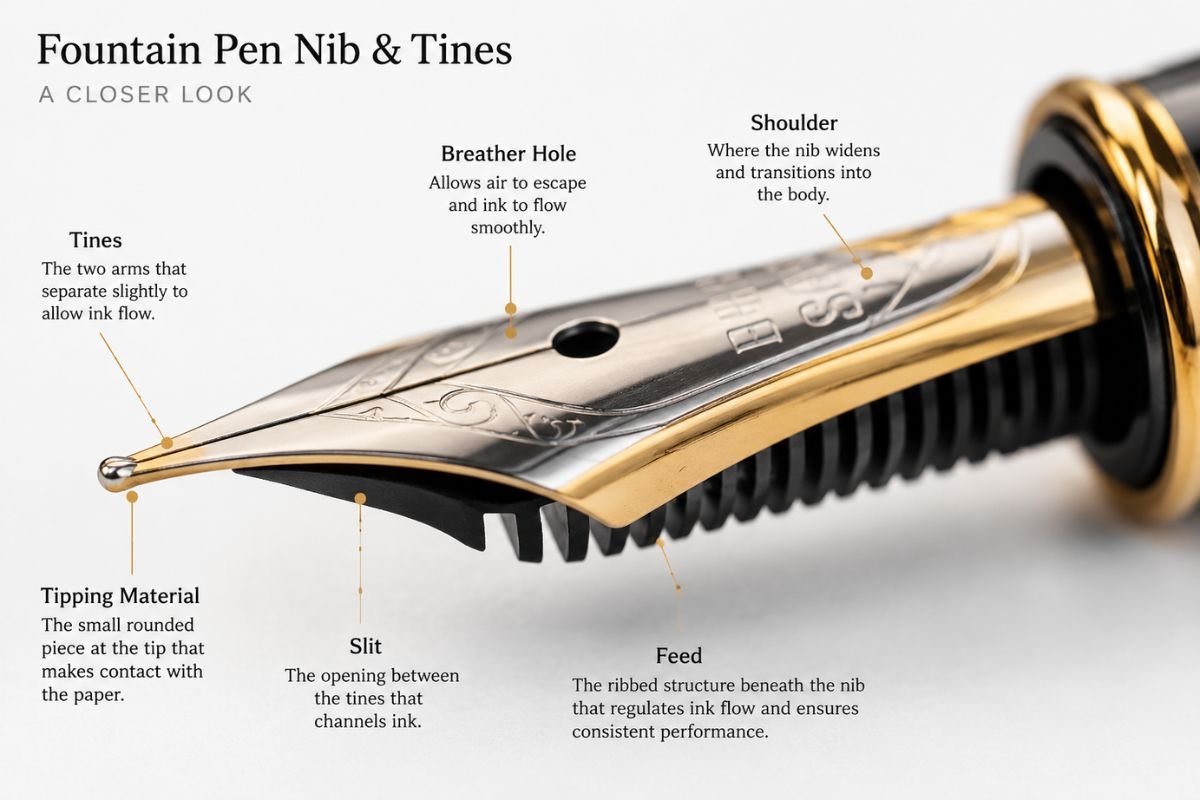
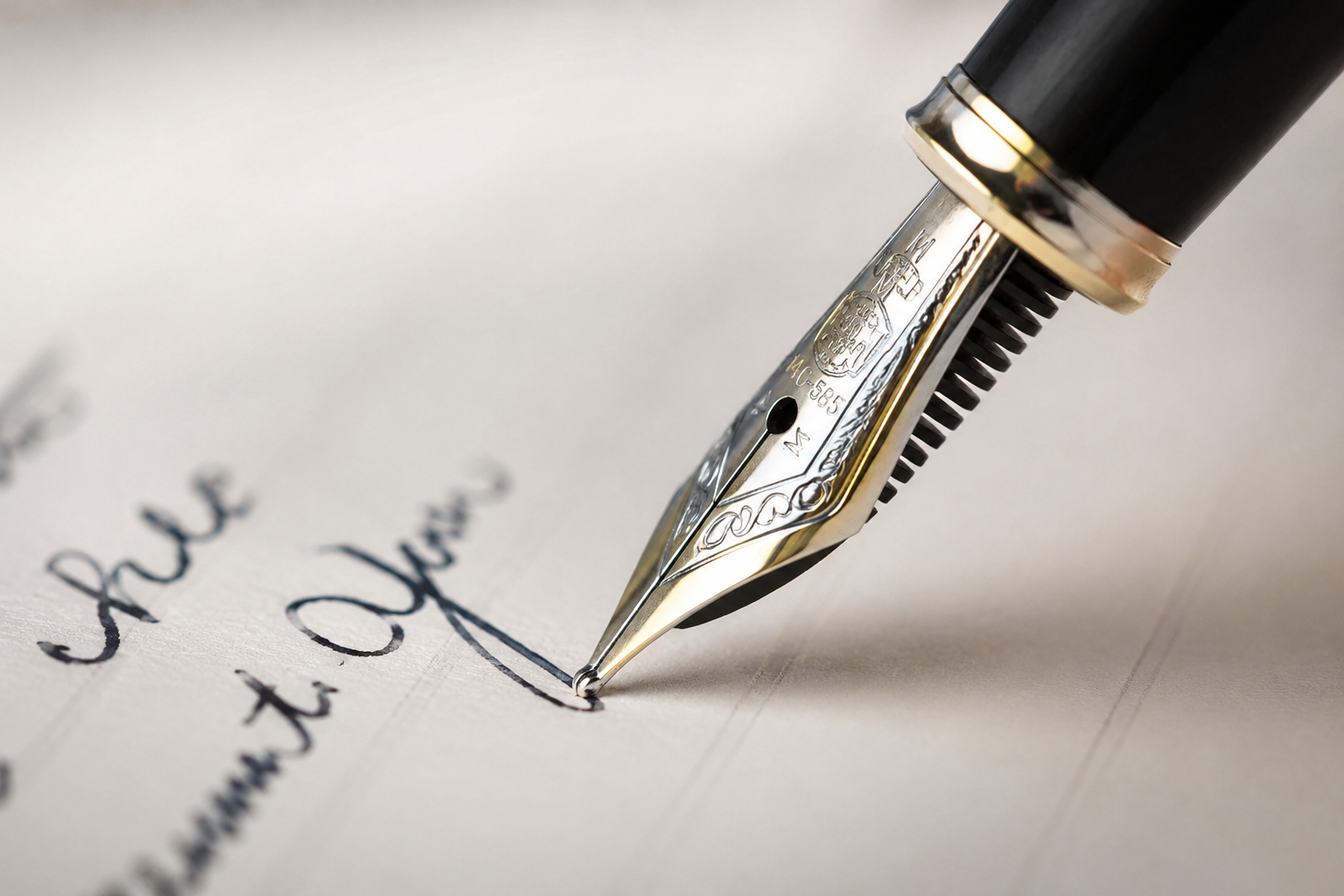
Before delving into tuning techniques, it is vital to comprehend the basic structure and function of a fountain pen nib. The nib is the metal tip through which ink flows onto paper; it acts as both a conduit and a controller of ink delivery. The quality of your writing largely depends on the precise alignment and condition of this component. A well-maintained nib ensures consistent ink flow, minimal skipping, and smooth glide across the paper surface. Conversely, a misaligned or damaged nib can lead to scratchiness, irregular ink distribution, or even leakage.
The key components of a typical fountain pen nib include the tipping material (usually gold or steel), the tines (the two halves that split at the tip), and the feed (which supplies ink). Each element plays an integral role in ensuring optimal performance. Proper understanding of these parts helps when diagnosing issues and performing adjustments. Regular inspection for signs of wear or misalignment allows for timely intervention to preserve writing quality. Ultimately, mastering this foundational knowledge sets the stage for effective nib tuning.
- Recognize the importance of correct alignment for smooth ink flow
- Identify signs of wear such as scratches or uneven tines
- Understand how each part influences overall writing performance
- Regularly inspect your nib for damage or misalignment
- Learn basic terminology to facilitate precise adjustments
Having a solid grasp of these fundamentals will empower you to approach tuning with confidence and precision.
Tools Required for Effective Nib Tuning
Embarking on nib tuning necessitates gathering specific tools tailored to delicate adjustments without damaging your pen. The right equipment ensures that modifications are precise and safe. Essential tools include a loupe or magnifying glass for detailed inspection; smooth flat-tipped tweezers for realignment; small needle files or abrasive pads for shaping; a brass shaper or burnisher to refine tine edges; and high-quality lubricant like silicone grease if necessary.
Additional supplies such as soft cloths or microfiber towels help clean residual ink before adjustments, while specialized nib smoothing films can be used for polishing tips gently. Having these tools readily accessible minimizes errors during tuning procedures. It is also advisable to work in a clean environment free from dust particles that could contaminate delicate parts.
Using appropriate tools not only preserves the integrity of your fountain pen but also enhances precision during fine-tuning processes. Investing in quality equipment yields better results and prolongs your pen’s lifespan.
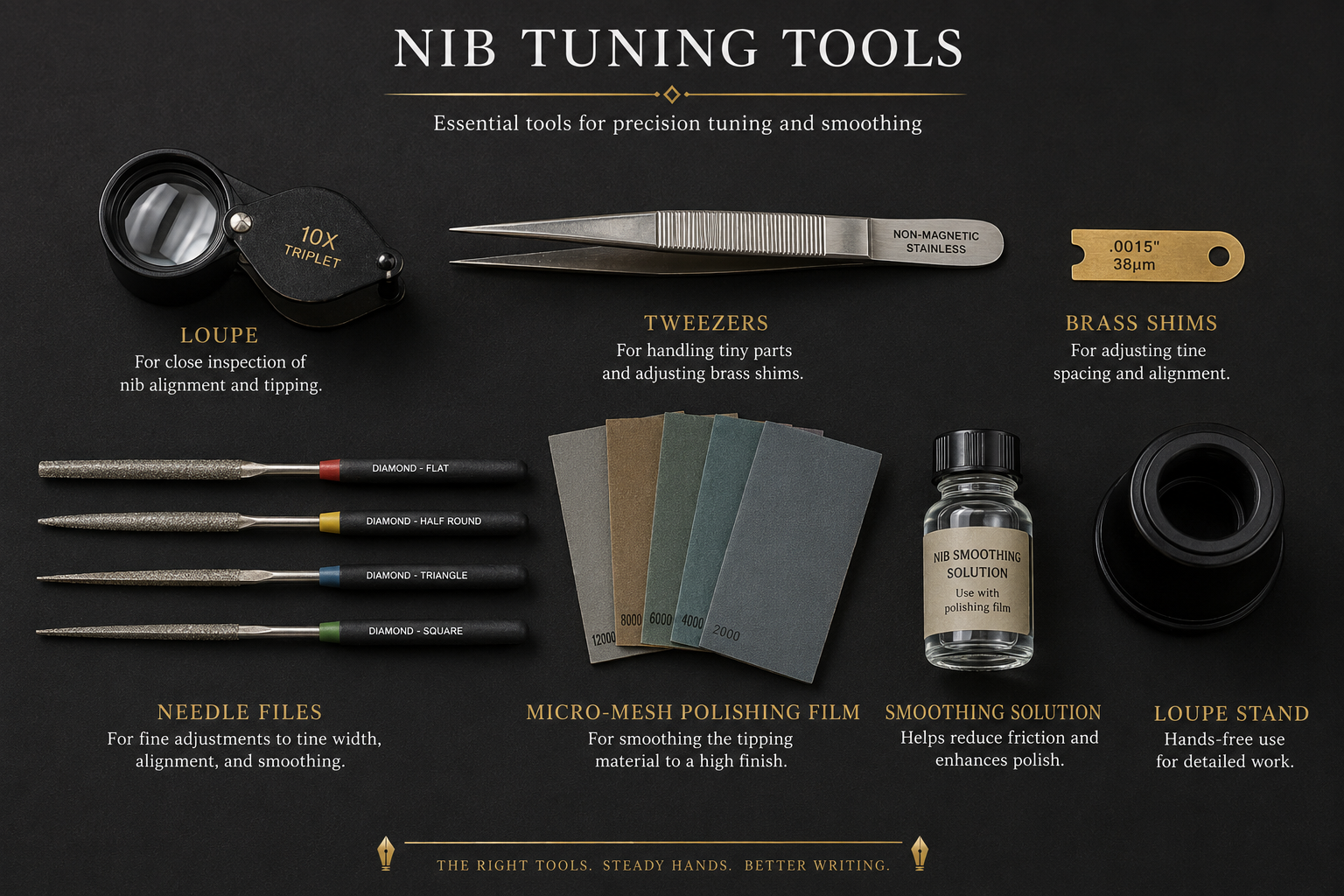
- Magnifying glass or loupe for detailed inspection
- Fine-tipped tweezers for precise realignment
- Needle files or abrasive pads for shaping tines
- Brass shaper or burnisher for refining edges
- Cleaning cloths to remove residual ink before adjustments
Proper preparation with suitable tools is fundamental to achieving professional-level results in nib tuning.
Diagnosing Common Nib Issues
Effective nib tuning begins with accurately diagnosing prevalent problems that hinder optimal performance. Common issues include skipping—where the ink fails to flow smoothly; scratchiness—causing discomfort during writing; inconsistent ink flow—leading to blotches or dry strokes; and excessive feathering or bleed-through on certain papers.
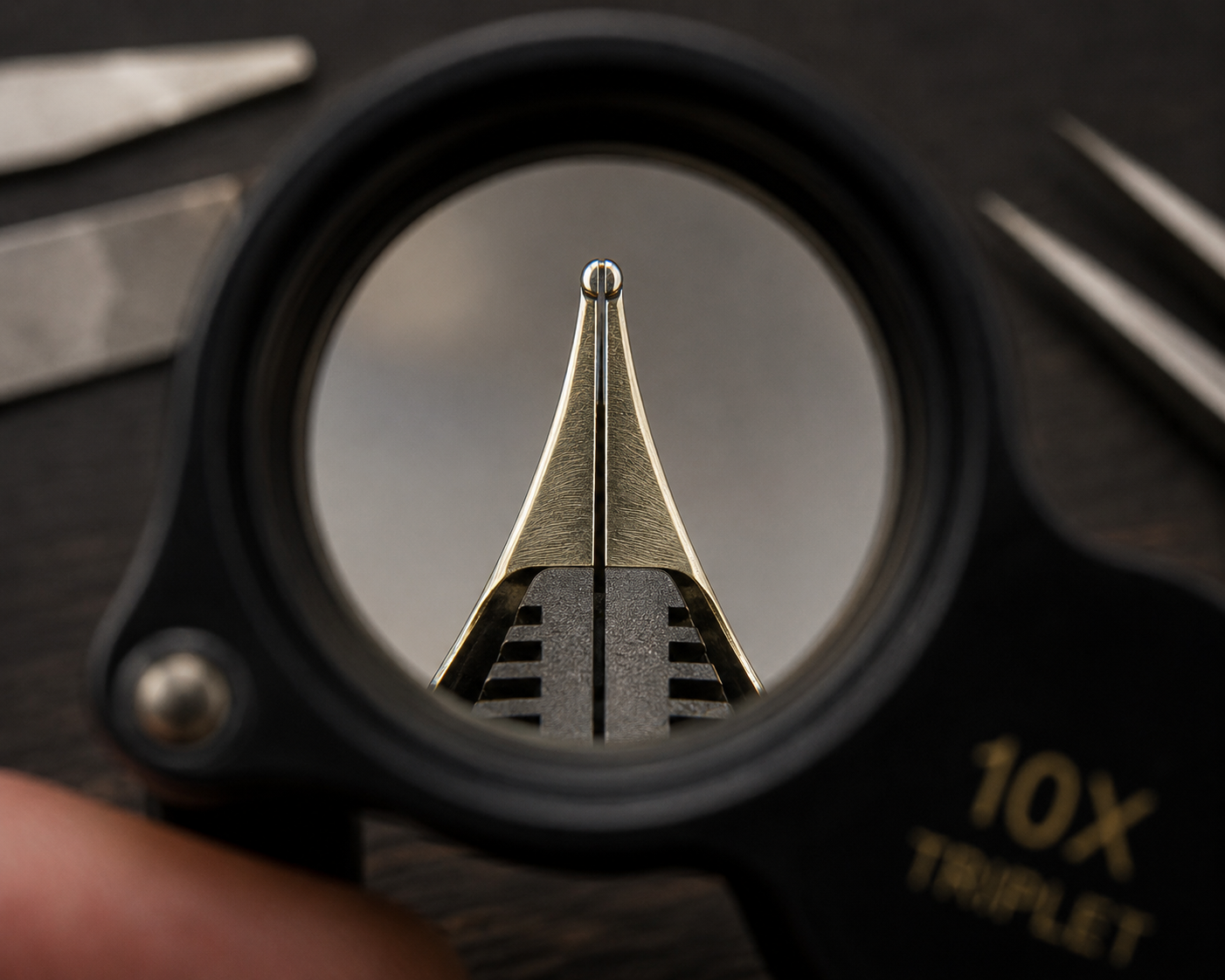
To diagnose these problems properly, examine your nib under magnification to check tine alignment and cleanliness. If the tines are misaligned—either too wide apart or uneven—adjustments are necessary. Additionally, assess whether there is any visible damage like dents or burrs along the tip that might impede smooth contact with paper surfaces. Testing on different papers can help determine if issues stem from ink compatibility rather than mechanical faults.
Once identified, each issue requires tailored solutions: aligning tines improves consistency; polishing rough edges reduces scratchiness; adjusting pressure settings can regulate ink flow; replacing worn parts may be necessary in severe cases. Correct diagnosis ensures targeted interventions that restore your fountain pen’s performance effectively.
- Check tine alignment under magnification
- Look for physical damage such as dents or burrs
- Test on various paper types for compatibility issues
- Observe ink flow during initial strokes
- Identify if problems are mechanical or related to ink/paper choice
Understanding these common pitfalls paves the way toward precise correction strategies that enhance writing quality.
Adjusting Tine Alignment for Smooth Writing
One of the most crucial aspects of fountain pen nib tuning involves adjusting tine alignment—a process fundamental to achieving smooth writing with consistent ink flow. Properly aligned tines allow even contact across their entire length during strokes, reducing resistance and preventing skipping or scratchiness. Misaligned tines often cause uneven ink distribution and uneven line width.
To adjust tine alignment accurately, start by inspecting under magnification whether both tines are parallel at the tip. If they are uneven—one side protrudes more than the other—you can gently realign them using fine tweezers by carefully nudging them into proper position. In some cases, slight widening or narrowing may be needed by gently adjusting with needle files or abrasives designed specifically for delicate metalwork. After adjustment, test by drawing lines on scrap paper until smoothness is achieved.
Consistent practice coupled with patience will allow you to master this technique over time. Correctly aligned tines not only improve aesthetics but also significantly enhance comfort during extended writing sessions by providing uniform contact with paper surfaces.
- Use magnification to assess tine alignment visually
- Gently nudge misaligned tines using fine tweezers
- Avoid applying excessive force that could damage the tip
- Test adjustments by drawing multiple lines until smoothness is consistent
- Repeat as necessary until desired alignment is achieved
Achieving perfect tine alignment transforms a good fountain pen into an exceptional instrument capable of delivering fluid, effortless strokes.
Shaping and Refining Tine Edges
Refining the edges of your fountain pen’s tines is essential when addressing roughness or inconsistency at the tip that hampers smooth writing performance. Over time, small burrs or irregularities can develop along the tip due to wear or improper handling, resulting in scratchy sensations against paper surfaces. Shaping involves carefully filing away imperfections while maintaining proper geometry.
Begin by inspecting under magnification where any rough edges are present; then use very fine needle files designed explicitly for delicate metalwork. Lightly stroke along the edge in one direction without removing too much material—precision here is paramount—to create a polished taper that facilitates seamless contact with paper fibers. Following filing sessions with polishing films helps remove minor scratches and enhances surface smoothness further.
Consistent shaping not only improves tactile feedback but also promotes uniform ink application across strokes. When executed correctly, this process restores both aesthetic appeal and functional efficiency within your fountain pen’s operation.
- Identify rough spots with magnification inspection
- Use fine needle files cautiously around critical areas
- Maintain original tipping geometry during shaping
- Polish edges with smoothing films after filing
- Test on scrap paper repeatedly until smoothness is achieved
Properly refined tine edges ensure effortless glideability while reducing fatigue over long writing periods.
Adjusting Ink Flow Through Feed Modifications
Achieving optimal ink flow requires more than just aligning and shaping the nib—it often involves modifications to the feed system responsible for delivering ink from reservoir to tip efficiently. An inadequate feed can cause dry strokes, inconsistent lines, or skipping altogether despite well-tuned tines themselves.
Adjustments include thinning out overly dense feed channels using gentle filing techniques—taking care not to compromise structural integrity—or adding small grooves if necessary to improve capillary action. Alternatively, some enthusiasts opt for replacing standard feeds with custom-designed ones tailored specifically for their preferred inks and writing styles.
Monitoring how well ink transfers during testing phases guides further modifications: steady streams without blots indicate proper flow; sudden interruptions suggest blockages requiring cleaning or reconfiguration. Balancing feed adjustments delicately ensures continuous supply without flooding hazards—a key aspect in professional-grade tuning efforts aimed at achieving flawless operation across diverse inks and papers.
- Examine feed channels under magnification
- Carefully file channels if they appear overly dense
- Consider custom-feed replacements suited for specific inks
- Test by drawing continuous lines on varied papers
- Adjust incrementally until consistent flow occurs
Fine-tuning feed mechanisms elevates your fountain pen’s reliability and contributes significantly toward smoother writings experience.
Polishing Tips & Final Surface Refinement
The final step toward professional-level fountain pen tuning involves polishing tips and refining surfaces—a process that enhances both aesthetics and performance attributes like smoothness and durability. Roughened surfaces caused by manufacturing residues or minor mishandling can increase friction against paper leading to discomfort during use.
Using special polishing films designed explicitly for fine metals helps create an ultra-smooth surface at the tip while eliminating micro-scratches left from previous adjustments procedures like filing or shaping. Gentle buffing circles should be performed in one direction only—never back-and-forth—to prevent uneven wear patterns that could alter geometry adversely over time.
This meticulous polishing not only improves tactile feel but also reduces risk of future damage from debris accumulation at microscopic levels within tiny crevices around the tip area—thus extending overall longevity of your investment in high-quality fountain pens.
- Using ultra-fine polishing films after filing steps
- Applying light circular buffing motions exclusively
- Ensuring no debris remains post-polishing
- Inspecting under magnification afterward
- Repeating until surface appears mirror-smooth
A polished tip guarantees superior glideability across various paper textures while maintaining aesthetic brilliance—making every stroke feel effortless yet refined.
Maintaining Your Tuned Nib Performance
Ongoing maintenance plays an integral role in preserving your meticulously tuned fountain pen’s excellent performance over time. Proper cleaning prevents build-up of dried ink residues which could hinder airflow through feeds—and consequently affect ink flow consistency—even after initial tuning success.
Regularly flushing your pen with water—or specially formulated cleaning solutions—ensures removal of potential blockages while also checking for any signs of wear needing further adjustment down the line. Store your pens horizontally when not in use rather than point-down positions so gravity doesn’t encourage unwanted leaks; additionally avoid exposing them to extreme temperatures which may impact materials’ integrity internally.
Periodic re-inspections enable early detection of emerging issues, allowing prompt corrections before deterioration impacts daily usage experiences dramatically. Consistent care sustains optimal functioning while prolonging lifespan—making sure every stroke remains as flawless as intended thanks to diligent upkeep practices rooted in expert knowledge about fountain pen maintenance principles.
- Regular flushing with water after use
- Checking alignment periodically
- Avoiding exposure to extreme heat/cold
- Storing horizontally when idle
- Conducting routine inspections under magnification
Adopting disciplined maintenance routines guarantees sustained excellence from your finely tuned fountain pens – ensuring each word flows effortlessly long after initial adjustments have been made.
Elevate Your Writing Experience: Mastering Fountain Pen Nib Tuning
In conclusion, mastering fountain pen nib tuning unlocks unparalleled potential within each instrument—from achieving silky-smooth lines through precise alignment adjustments to refining micro-details via careful shaping and polishing techniques—all contributing towards an extraordinary writing journey characterized by impeccable ink flow and unrivaled comfort. Whether you seek perfection in personal journaling tasks—or aspire towards professional calligraphy mastery—the knowledge outlined herein provides essential guidance rooted in craftsmanship tradition combined with modern precision methods needed by today’s discerning writers.
Frequently Asked Questions
How often should I tune my fountain pen nib?
Most nibs only need attention when you notice scratchiness, skipping, or uneven ink flow — there’s no fixed schedule. Light inspection every few months, combined with routine cleaning, is usually enough to catch issues early.
Can I tune a nib myself, or should I send it to a professional?
Minor tine realignment and cleaning are safe for most users to try at home with the right tools and patience. However, deeper adjustments — reshaping tipping material, correcting severe misalignment, or fixing damaged feeds — are best left to an experienced nib technician to avoid permanent damage.
Why does my pen skip even after tuning the tines?
If skipping persists after tine alignment, the issue is often in the feed rather than the nib itself. Check for dried ink blocking the feed channels, or test with a different ink to rule out compatibility problems with your paper.
What’s the safest way to polish a nib without damaging it?
Use micro-mesh or dedicated nib smoothing films in gentle, single-direction strokes rather than back-and-forth motions. Always inspect progress under magnification and stop as soon as the surface feels smooth on scrap paper — over-polishing can wear down tipping material.
How do I know if the problem is the nib or the ink/paper?
Test the same pen with a different ink and a different paper. If the writing improves, the original issue was likely compatibility rather than a mechanical nib problem. If skipping or scratchiness persists across combinations, the nib itself needs adjustment.
Is it normal for a new fountain pen to need tuning out of the box?
Yes, this is fairly common, especially with mass-produced steel nibs. Manufacturing tolerances mean tines aren’t always perfectly aligned from the factory, so a bit of fine-tuning on a new pen is normal and often improves the writing experience significantly.