


Blog
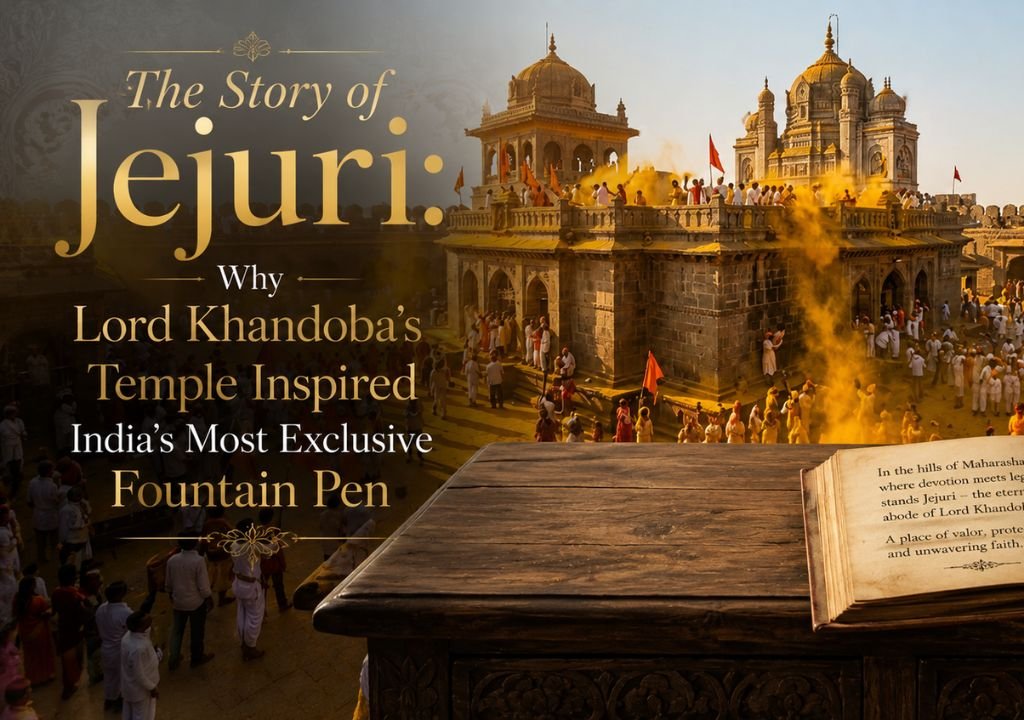
The Story of Jejuri: Why Lord Khandoba’s Temple Inspired India’s Most Exclusive Fountain Pen

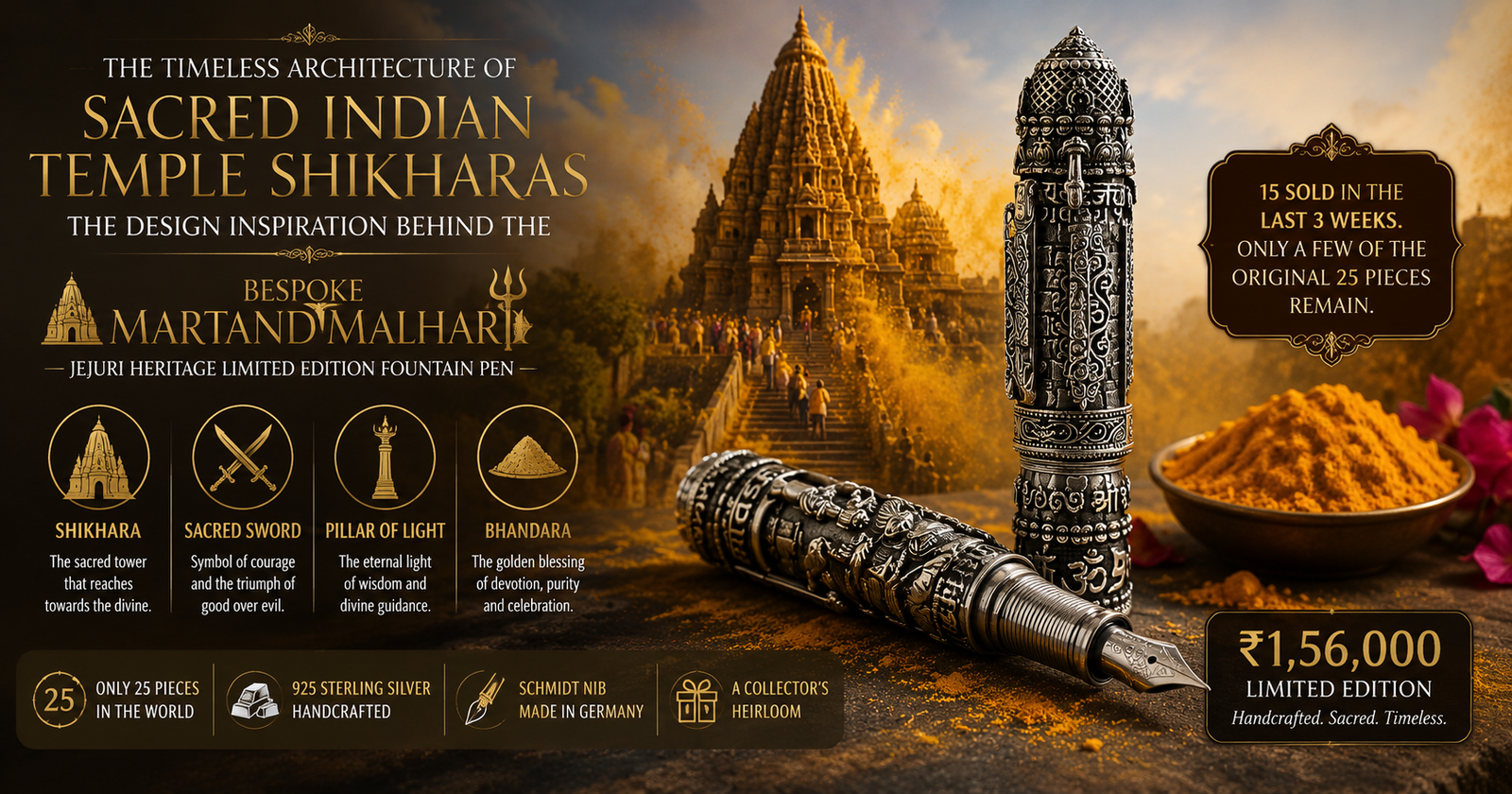
The timeless architecture of sacred Indian temple shikharas — the design inspiration behind the Bespoke Martand Malhari pen cap.
15 sold in the last 3 weeks. Only a few of the original 25 pieces remain.
There are places in India that don’t just exist on a map. They exist in memory, in faith, in the golden dust that settles on your hands as you climb an ancient staircase and wonder how many thousands of hands touched the same stone before yours.
Jejuri is one of those places.
Perched on a hilltop in Pune district, Maharashtra, the Jejuri temple is the sacred abode of Lord Khandoba — warrior, guardian, and the people’s deity. For centuries, pilgrims have climbed its 200 stone steps carrying prayers, turmeric, and devotion. Farmers seeking rain. Warriors seeking courage. Families seeking blessings. Each one leaving a little of themselves behind on those ancient stairs.
When we set out to create the most meaningful pen in The Pen Lounge’s history, we didn’t look to Europe or Japan. We looked to the hill at Jejuri.
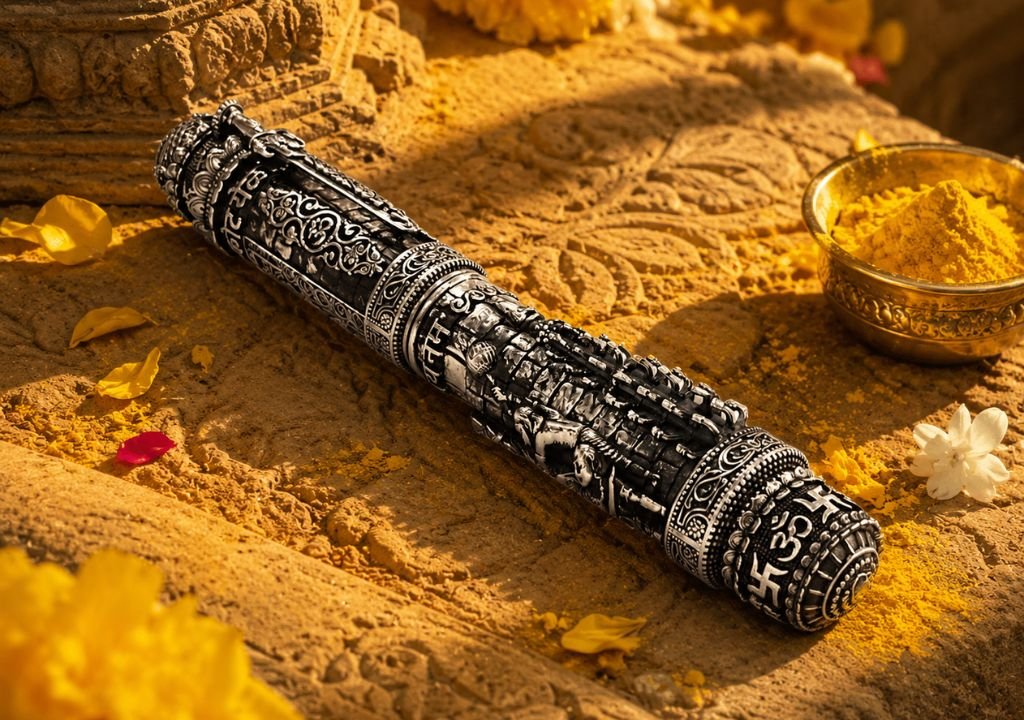
Ancient stone steps like those at Jejuri — worn smooth by centuries of pilgrimage and devotion.
Who Is Lord Khandoba, and Why Is He Called Martand Malhari?
Lord Khandoba is one of Maharashtra’s most beloved deities — a form of Lord Shiva worshipped across the Deccan plateau for over a thousand years. He is known by many names: Martand (the radiant sun), Malhari (the slayer of Malla), and Khandoba (the lord of the sword).
His legend tells of two demon brothers, Mani and Malla, who terrorised the world until Lord Khandoba descended to defeat them. When Malla finally surrendered, he begged for mercy — and in a gesture of divine compassion, Khandoba granted him a place in eternal service. That act of righteous strength balanced with mercy is the essence of what Khandoba represents to his devotees.
What Makes the Jejuri Temple So Significant?
The Jejuri temple sits atop a small but commanding hill, visible for miles across the Maharashtrian plateau. The climb to the shrine is part of the experience — 200 steps, each worn smooth by centuries of pilgrimage, leading you past smaller shrines, vendors selling fragrant flowers, and the golden shimmer of turmeric (Bhandara) dusting the air.
At the summit stands the Shikhara — the sacred tower of the temple, its silhouette instantly recognisable against the sky. The Jejuri temple is also the site of one of Maharashtra’s most visually stunning festivals — Somyati Amavasya — when devotees throw Bhandara (turmeric powder) into the air, creating golden clouds that drift across the hilltop.

Bhandara — the sacred golden turmeric that transforms Jejuri into a sea of gold during festivals. Its spirit lives in the gold accents of this pen.
How Did Jejuri Inspire the Design of This Fountain Pen?
Every element of the Bespoke Martand Malhari pen was chosen deliberately, with deep respect for the symbolism of Jejuri. Here is how each sacred motif translates into the pen’s design:
🏛️ The Shikhara
The pen’s cap echoes the temple tower’s profile — upward, purposeful, enduring. When you cap this pen, you are housing a story.
⚔️ The Sacred Sword
Engraved in sterling silver — symbol of courage and the triumph of good. A reminder that the written word, like a blade, stands for truth.
💡 The Pillar of Light
Representing divine illumination and wisdom. The eternal light that guides the intellect — fitting for an instrument of writing.
✨ The Bhandara
Golden accents throughout the pen pay homage to the sacred turmeric. On this pen, it is devotion and joy made visible.
What Material Was Used, and Why 925 Sterling Silver?
The Bespoke Martand Malhari is crafted entirely in 925 Sterling Silver with a hand-applied oxidised finish. Silver has been a sacred metal in Indian tradition for millennia — used in temple vessels, ritual objects, and jewellery passed from generation to generation.
The oxidised treatment applied by hand to each pen darkens the recesses of every engraving, creating contrast and depth that makes the motifs leap from the surface. No two pens are identical — the hand-applied finish means each piece carries the subtle mark of the artisan who finished it.
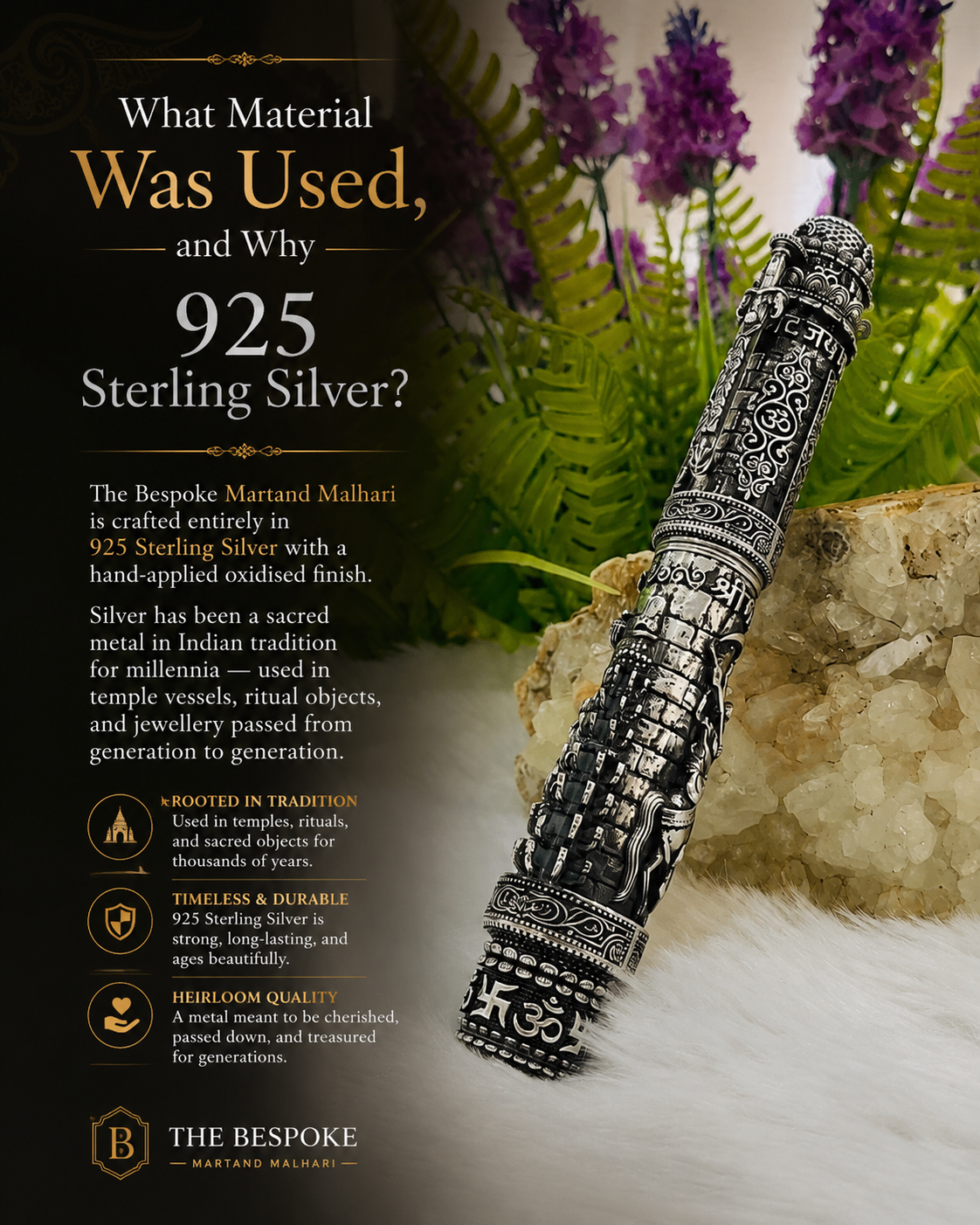
Each pen is individually hand-finished by skilled silversmiths — the oxidised treatment applied by hand, one pen at a time.
Why Are Only 25 Pens Being Made?
Limiting this edition to 25 pieces was not a marketing strategy. It was an honest reflection of what this pen requires to produce.
Each pen is individually crafted and hand-finished by skilled silversmiths. The engraving alone — the Shikhara, the Sword, the Pillar of Light, the Bhandara motifs — takes hours of precise, unforgiving work on a curved silver surface. There is no machine that can do what these hands do.
Who Is This Pen Made For?
This pen is made for several kinds of people, and all of them are rare:
The collector who understands that the finest writing instruments are also works of art, and that 925 Sterling Silver with hand-engraved devotional motifs belongs alongside the world’s great pens.
The devotee — someone with a deep personal connection to Lord Khandoba, to Jejuri, or to Maharashtrian heritage — who wants to carry that faith in an object of daily use.
The gift-giver who wants something that cannot be forgotten. The kind of gift that makes someone pause and ask, where did you find this?
The writer who believes that beauty and meaning in the instrument bring beauty and meaning to the word.
Only 25 Exist in the World
15 have already found their owners. Enquire now before the edition closes permanently.
Frequently Asked Questions
What is the Bespoke Martand Malhari Fountain Pen?
It is a limited edition handcrafted fountain pen made from 925 Sterling Silver Oxidised, inspired by the Jejuri temple and Lord Khandoba. Only 25 pieces exist worldwide, each individually hand-finished by skilled silversmiths.
What does Martand Malhari mean?
Martand means the radiant sun, and Malhari refers to the slayer of the demon Malla. Together, Martand Malhari is one of the most revered names of Lord Khandoba, the guardian deity of the Deccan plateau in Maharashtra.
What nib does the Bespoke Martand Malhari use?
The pen uses a Schmidt nib, manufactured in Germany, known for its smooth ink flow and reliable precision writing performance.
Why is the pen priced at ₹1,56,000?
The price reflects the use of 925 Sterling Silver, hours of hand-engraving and hand-applied oxidised finishing by skilled artisans, the limited run of only 25 pieces worldwide, and the German Schmidt nib. It is positioned as a collector’s heirloom, not a mass-market product.
Can the pen be personalised with engraving?
Yes. The Pen Lounge offers personalised engraving on bespoke pieces. Contact us via WhatsApp or through the product page to discuss customisation options.
Where can I buy the Bespoke Martand Malhari Fountain Pen?
Exclusively at The Pen Lounge — online at thepenlounge.com and at our Thane store in Maharashtra, India.
Explore more from The Pen Lounge →
All Bespoke Pens |
Limited Editions |
Blog