Types of Pens Explained: Ballpoint, Gel, Rollerball, Fountain and Felt-Tip
Every pen puts ink on paper, but they do it in very different ways. This guide explains the main types of pens, how each one works, what it is best at, and how to pick the right one for notes, exams, signatures, journaling or a gift.
By The Pen Lounge team | Updated 30 October 2026 | About 7 minutes to read
The short answer
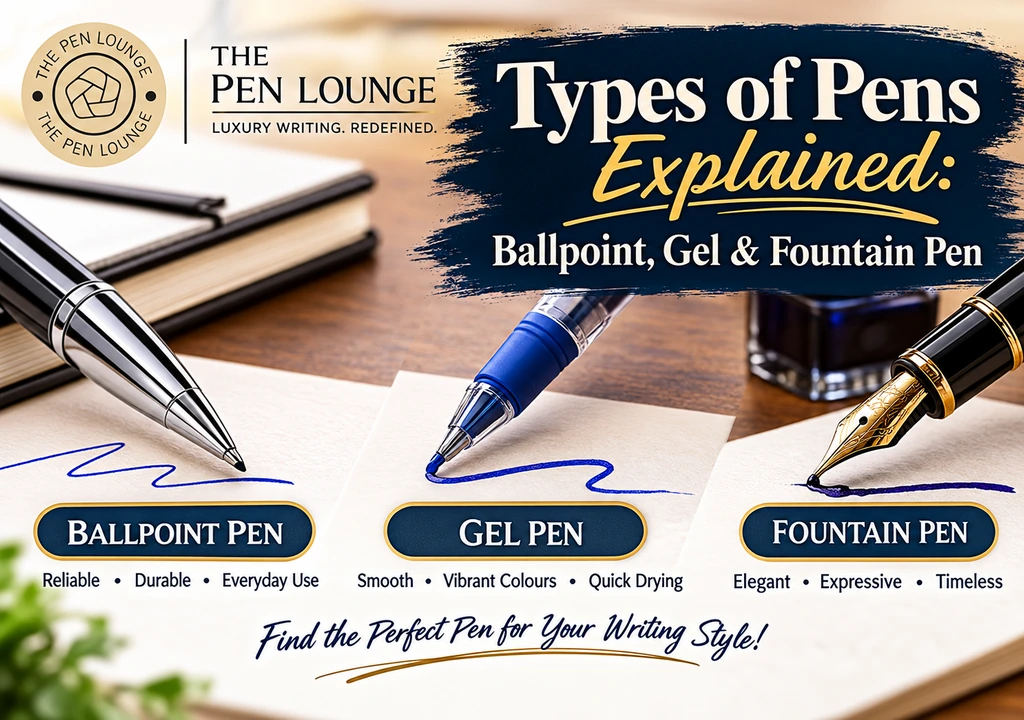
Ballpoint: reliable, cheap and quick-drying. Best for exams, forms and everyday use.
Gel: smooth, bold and colourful. Great for fast notes and journaling.
Rollerball: liquid ink and very light pressure. Lovely for signatures, but slower to dry.
Fountain pen: the most expressive and economical in the long run, but needs a little care.
Felt-tip or fineliner: soft tip for planners, sketching and colour work.
Use the pen finder below for a quick recommendation.
What is a pen, and what is an “ink pen”?
A pen is a writing instrument that puts ink on a surface. See Wikipedia’s pen article for the full history. A pencil is different, because it leaves a trail of graphite instead of ink.
In everyday speech, “ink pen” often means a fountain pen, but strictly every ink-based pen is an ink pen, including ballpoints, gel pens and rollerballs.
A short history
Reed and quill pens
Dipped in ink, used for centuries before metal nibs.
Steel-nib dip pens
Common in the 19th century, and still used for calligraphy. See dip pen.
Fountain pen (1880s)
Lewis Waterman patented a practical design with a reliable ink feed in 1884. See fountain pen.
Ballpoint (1888, then 1930s)
John J. Loud patented a ballpoint design in 1888, and László Bíró’s improved version in the late 1930s led to the modern ballpoint pen.
Felt-tip and rollerball (1960s)
Both appeared in Japan in the early 1960s. See felt-tip pen.
Gel pen (1980s)
Sakura introduced the gel pen in 1984, offering bold lines in many colours.
Comparison: the five main pen types
Type
Ink
Feel
Dries
Best for
Watch out for
Ballpoint
Oil-based paste
Firm, needs some pressure
Instantly
Exams, forms, carbon copies, everyday use
Can skip or blob. Less vivid colour.
Gel
Water-based gel
Smooth and bold
Fast, but can smudge
Notes, journaling, colour coding
Refills run out faster. Can bleed on thin paper.
Rollerball
Water-based liquid ink
Very smooth with light pressure
Slower
Signatures and long writing sessions
Can feather or bleed. Ink empties quickly.
Fountain pen
Water-based liquid ink
Smooth and nib-dependent
Varies with ink and paper
Journaling, letters, relaxed daily writing
Needs care. Small learning curve.
Felt-tip or fineliner
Water-based ink
Soft, light tip
Fast
Planners, sketching, annotating
Tips fray. Ink bleeds through thin paper.
Pen finder: which type suits you?
Pen finder
Two questions, one rule-of-thumb answer. Your hand and paper have the final say.
Best match: Gel pen. Smooth and bold with vivid colours. Great for fast note-taking.
Also try: Rollerball. Liquid ink gives a rich, smooth line with light pressure, but it dries slower than gel or ballpoint.
How the writing tips work
Ballpoint: a tiny rotating ball picks up thick ink from the reservoir and rolls it onto the paper. Ball sizes of 0.5, 0.7 and 1.0 mm are common.
Gel and rollerball: also use a ball, but with water-based ink, so they need less pressure and give a bolder, smoother line.
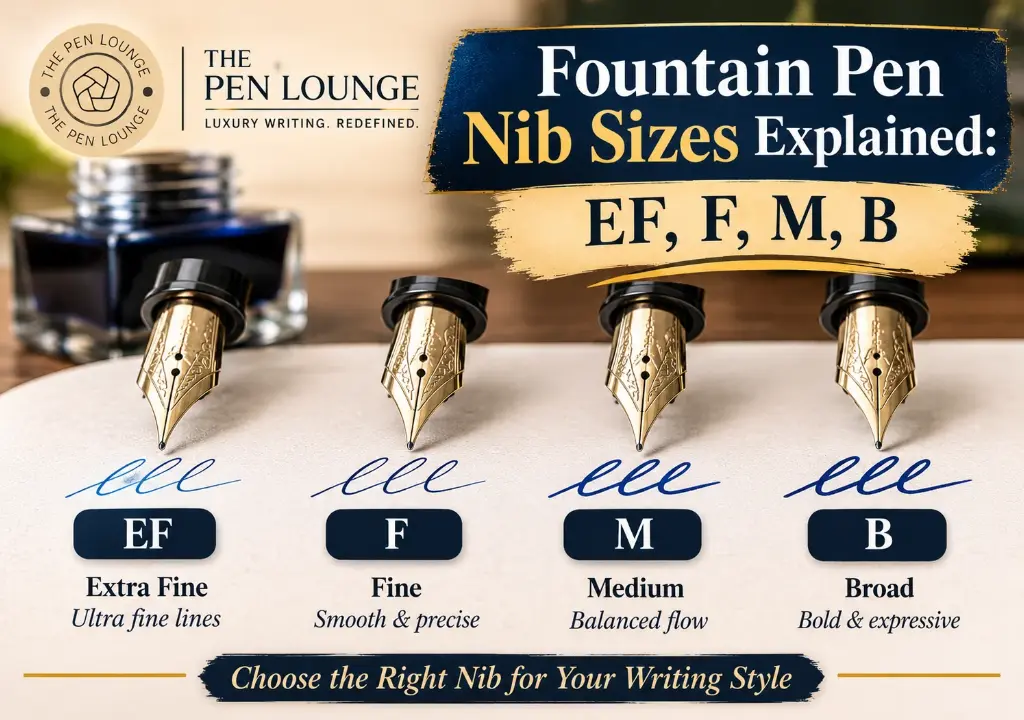
Fountain pen: a metal nib delivers liquid ink drawn from a reservoir by capillary action. Nib width sets the line. See our nib sizes guide.
Felt-tip: ink flows through a porous tip. The softer the tip, the more it wears.
Choosing refills
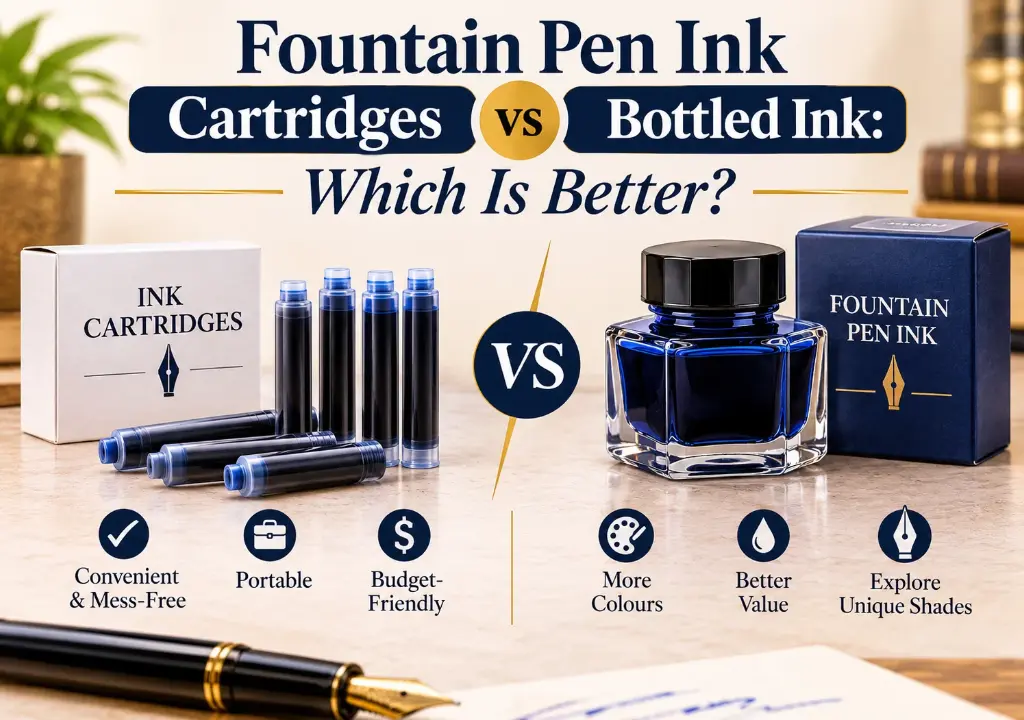
Refills differ in length, diameter, tip size and ink type, so they are not universal. Many metal pens accept a common “Parker-style” refill, but others need refills made for that brand. Bring your old refill when you shop, or measure its length and tip size, and check the pen’s model name. Fountain pens use ink instead: read our cartridge vs bottled ink guide.
Some rollerball pens accept a cartridge or converter, but most use sealed refills, so check the pen before you buy ink.
Choosing by situation
Situation
Try
Why
Exams and fast writing
Ballpoint or gel
Reliable, quick-drying and comfortable for long sessions
For someone who just wants to write, a rollerball or ballpoint is easy and low-maintenance. For an enthusiast, a fountain pen with a converter is a better gift. Check the nib size, ask how they hold the pen, and add a bottle of ink or a refill. See our new arrivals for ideas.
Common myths
“Fountain pens are hard to use.”
They have a small learning curve, mainly about angle and light pressure, but most people adapt within days. A fine or medium nib is the easiest start.
“Ballpoints are poor pens.”
They are reliable, cheap and work on many surfaces, and they are excellent for exams and forms.
“More expensive means better writing.”
Not always. A well-tuned budget pen can write beautifully, while a costly pen with a poor nib may disappoint. Judge by the writing sample.
Refillable and sustainable
A pen with a refillable cartridge or a metal body that takes refills creates less waste than a disposable plastic pen. Fountain pens with bottled ink produce the least, because only the ink bottle changes. See our cost calculator for the numbers.
In everyday speech it often means a fountain pen. Strictly, any pen that uses ink is an ink pen, including ballpoints, gel pens, rollerballs and felt-tips.
What is the difference between gel and ballpoint pens?
Gel pens use water-based gel ink, giving a smoother, bolder and more colourful line, but they can smudge and run out faster. Ballpoints use oil-based paste, which dries quickly and lasts long.
What is the difference between rollerball and gel pens?
Both use a rolling ball. Rollerballs use thin water-based liquid ink that flows easily, while gel pens use thicker gel ink that sits on the paper and dries faster.
Are fountain pens harder to use?
Slightly, at first. You need the right angle, light pressure and a little upkeep, but most people feel comfortable within days.
Which pen is best for fast writing in exams?
A ballpoint or a quick-drying gel pen is usually best, because it dries fast and is reliable. Pick one you have tested at your normal writing speed.
Which pen lasts the longest?
A ballpoint refill typically lasts longest per refill. Fountain pens last for decades if you maintain them, because you only replace the ink.
Are rollerball pens refillable?
Most take sealed refills, so you replace the refill. A few accept a cartridge or converter. Check the pen’s listing.
Which type of pen is best for left-handed writers?
Ballpoints and quick-drying gel pens smear least. Fountain pen users can pick a fine nib and a dry ink to reduce smudging.
The Pen Lounge team. We sell pens, notebooks and journals from Thane, and write these guides for people choosing their first or next pen. Questions? Visit the shop or tell us what you would like covered next.
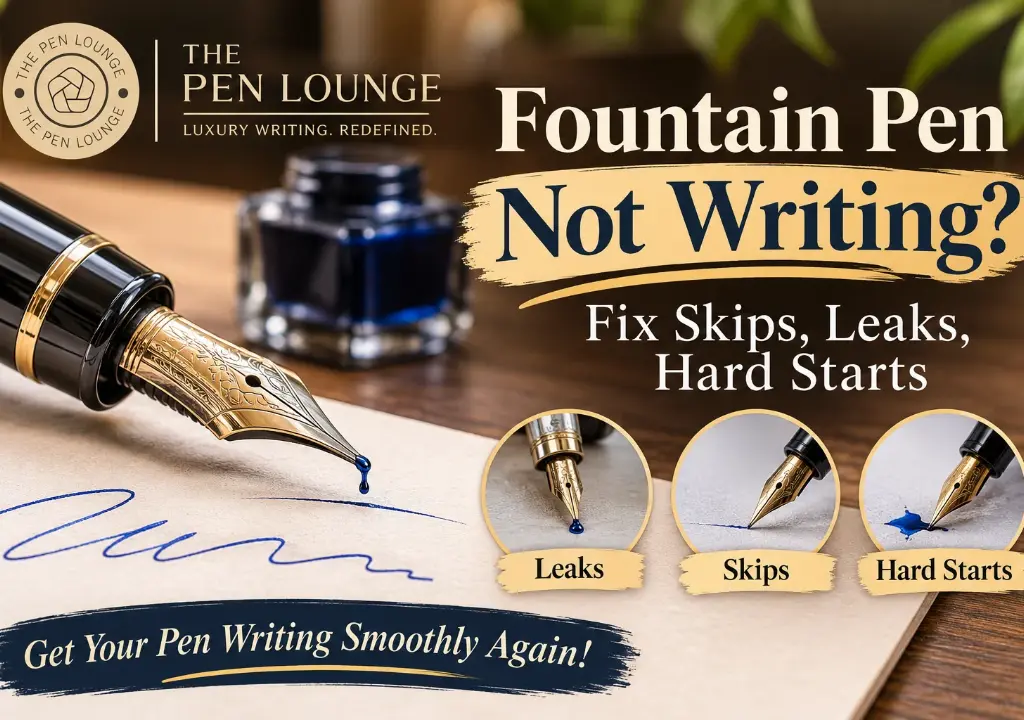
A fountain pen that skips, will not start or leaks is almost always fixable at home. This guide shows how to diagnose each problem, in order, from the simplest fix to the point where it is time to see a repairer. It is a practical fountain pen troubleshooting guide, with a symptom finder and a cleaning routine you can follow.
The nib size decides how thick your line is, how your handwriting looks and how the pen behaves on paper. This guide explains fountain pen nib sizes from extra fine to broad, plus stub, italic and flex nibs, and shows you how to choose one.
A fountain pen can drink from a sealed cartridge or from a bottle through a converter. Both work well. This guide explains the real differences in cost, mess, colour choice and compatibility, so you can choose the right fountain pen ink cartridges or bottled ink for your pen and your routine.