Fountain Pen Ink Cartridges vs Bottled Ink: Which Is Better?
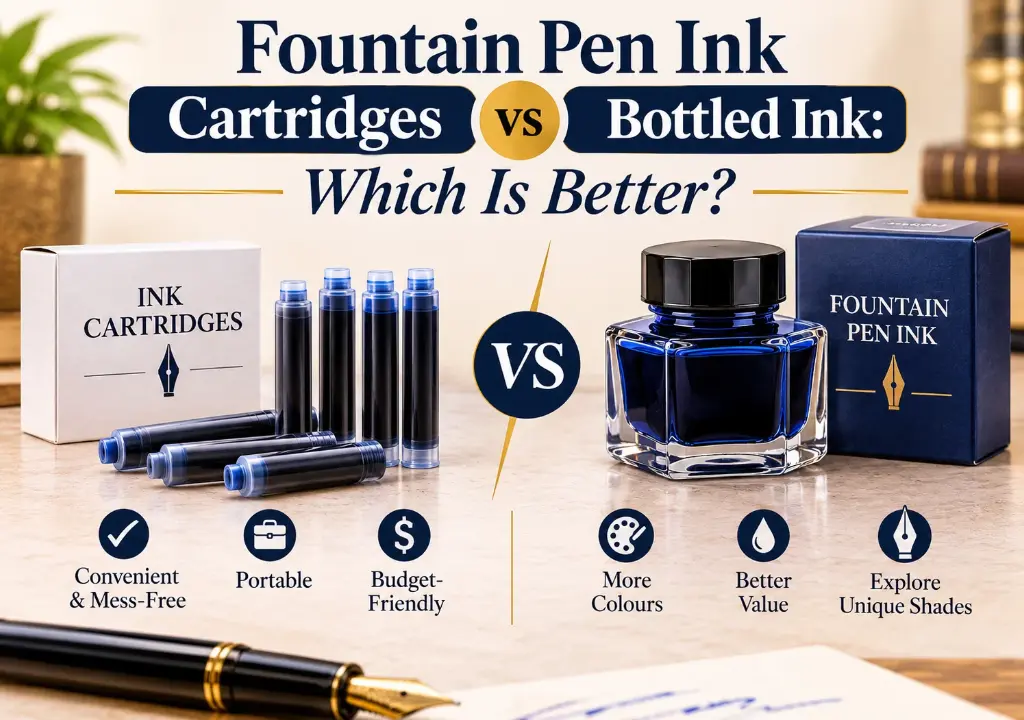
A fountain pen can drink from a sealed cartridge or from a bottle through a converter. Both work well. This guide explains the real differences in cost, mess, colour choice and compatibility, so you can choose the right fountain pen ink cartridges or bottled ink for your pen and your routine.
By The Pen Lounge team | Updated 30 October 2026 | About 10 minutes to read
The short answer
Cartridges are the easiest and cleanest: push one in and write. They suit beginners, offices, exams and travel.
Bottled ink costs far less per millilitre and comes in many more colours and ink types. The calculator below does the maths with your own prices.
Cartridges are not universal. Parker, Pilot and Lamy each use their own shape, while many other pens take the “international standard” size. Check your pen’s manual first.
Many pens that take cartridges also accept a converter, which lets you fill from a bottle later. You can use both.
Never mix different inks inside one pen without flushing it first. See our troubleshooting guide for how.
What are cartridges, converters and bottled ink?
A cartridge is a sealed plastic tube of ink. You push it onto a small spike inside the pen, which pierces the seal and lets ink flow towards the nib. A converter is a small refillable pump that fits in the same place, so the pen can draw ink from a bottle. Bottled ink is simply ink sold by volume, usually 30 to 60 ml.
Some pens, such as piston fillers, have a filling system built into the barrel and work only with bottled ink. For the wider background on how pens take in ink, see Wikipedia’s fountain pen article.
Cartridges vs bottled ink at a glance
Factor
Cartridges
Bottled ink (converter or piston)
Convenience
Fastest. Swap and write.
Needs filling and wiping the nib.
Mess
Very little, though a squeezed cartridge can leak.
Some risk of ink on fingers and desks.
Cost per ml
Usually higher, because of packaging and small volumes.
Usually much lower, especially in larger bottles.
Colour choice
Limited to what your brand makes in that format.
Hundreds of colours and properties, such as waterproof, sheening or quick-drying.
Travel
Spare cartridges fit in a pen case. No bottle to carry.
Fill before you leave, or carry a small sealed bottle.
Waste
One small plastic cartridge per refill.
A reusable converter and one bottle for many refills.
The numbers below are examples, not real prices. Type in what you actually pay.
Cartridges cost about ₹25.00 per ml. Bottled ink costs about ₹6.00 per ml. Bottled ink is about 4.2× cheaper per ml. A converter costing ₹300.00 pays for itself after roughly 16 ml of ink, about 16 cartridges’ worth.
The example shows why most regular writers move to bottles: the cost per ml falls sharply once you own a converter. Cartridges still win on convenience, so many people keep a few in a pen case for emergencies.
Will this cartridge fit my pen?
Cartridges are not universal. Pen makers use a few different formats, and the wrong one will not seat properly or will leak. Use this table as a starting point, then confirm with your pen’s manual or product listing.
Format
Typical pens
What to know
International standard, short
Many pens from Europe and Asia, including many budget pens such as Hongdian
The most widely sold format, in many colours. Look for the words “international standard” in the listing.
International standard, long
Pens with a longer barrel
Fits the same way but holds more ink. Only works if your barrel is long enough.
Parker
Parker fountain pens
Parker uses its own cartridge shape. Buy the type listed for your model.
Pilot
Pilot and Namiki pens
Pilot has its own cartridge and converter formats. Match the model name.
Lamy
Safari, AL-star and similar
Lamy uses its own T10 cartridge and Z28 converter.
Other brand-specific
Pelikan, Waterman, Sheaffer, Cross and many vintage pens
Look up your exact model before buying cartridges or a converter.
The easy way to check
Look at an empty cartridge from the pen, read the brand on the box, or search your exact pen model with the word “converter”. If you are still unsure, buy one cartridge first, not a large pack.
How to change a cartridge
Unscrew the barrel from the section (the grip with the nib).
Remove the old cartridge by pulling it off the small spike in the section.
Push the new cartridge on firmly until it seats and the seal pierces. You often feel a small click.
Screw the barrel back on and hold the pen nib-down for a minute so ink reaches the feed.
Write a few lines. If ink does not flow, tap the pen gently and wait. Do not squeeze the cartridge hard. See our fix guide for stubborn starts.
How to fill a converter from a bottle
Fit the converter in place of the cartridge. Some push in, others screw in.
Empty the converter by turning its knob so the piston is fully down.
Dip the nib so the whole opening of the section is under the ink. Hold the bottle steady on a flat surface.
Turn the knob to draw ink up. Release a little and draw again to remove air bubbles.
Wipe the section and nib with a tissue. Ink hides in the grip and will end up on your fingers if you skip this.
Write a test line before you cap the pen.
Vintage and lever-filler pens
Pens with rubber sacs, levers or buttons have their own methods and are easy to damage. Follow the maker’s instructions, and see our pre-owned pen guide before filling an old pen.
Can you refill empty cartridges?
Yes. Many people refill spent cartridges with a blunt-tip syringe, which gives the convenience of a cartridge with the low cost of bottled ink. Rinse the empty cartridge with water, let it dry, fill it slowly from the bottle, and press it onto the spike as usual.
Why people do it
Cartridge convenience at bottle prices
Use any fountain pen ink in a cartridge-only pen
Easy to carry spares in different colours
Watch out for
Cartridges can crack or leak after several refills
Air bubbles if you fill too fast
Not worth it for tiny or sealed formats
Which inks are safe to use?
Use ink labelled for fountain pens from a maker that sells fountain pen ink, such as Parker, Pilot, Lamy, Pelikan or Diamine. These inks are designed to flow through a narrow feed and to clean out of a pen. Inks differ in colour, flow and water resistance, which we explain in our ink types guide. Beginners will also like how to choose your first fountain pen ink.
Never put these in a fountain pen
India ink, drawing ink and most calligraphy or technical inks. They are often waterproof and can dry hard inside the pen.
Acrylic, shellac-based or waterproof art inks.
Printer ink, ballpoint ink and washable marker ink.
Any ink that does not say it is safe for fountain pens.
Storing ink and travelling with it
Keep bottles upright, tightly closed and away from direct sun and heat. Indian summers and hot cars thin ink and speed up evaporation.
Avoid dipping a dirty nib into the bottle again and again. It can introduce dust and mould. Use a clean dropper if you refill often.
Before flying or travelling to a very different altitude, fill the pen completely or empty it. A half-empty pen can burp ink when the air inside expands.
Carry the pen nib up in a pen case, and pack spare cartridges rather than a loose bottle if you travel light.
If an ink smells sour, grows threads or turns cloudy, throw it away.
Common mistakes
Mixing inks in one pen. Different inks can react and leave sludge. Flush with water between colours.
Buying the wrong cartridge. Check the format before you buy a pack.
Overfilling a converter. A full converter in a warm room can leak into the cap.
Leaving ink in a pen for months. It dries and clogs. Write weekly or flush and store the pen empty.
Pouring bottled ink into the barrel. Only pens designed as eyedroppers can be filled that way.
Which should you choose?
Choose cartridges if…
You are new to fountain pens and want a clean start.
You write at work, in exams or on the go.
You rarely write enough to justify a bottle.
Choose bottled ink if…
You write often and want to spend less per page.
You want specific colours or properties, like water-resistant ink.
Your pen has a converter or piston filler.
Do both if…
Your pen takes a converter. Keep cartridges as a backup and bottles as your main supply.
Diamine: a maker of fountain pen inks, with colour ranges
r/fountainpens: community help for filling and ink questions
Frequently asked questions
Are cartridges or bottled ink better for beginners?
Cartridges are easier to start with because there is no filling and very little mess. If your pen also accepts a converter, buying one is cheap and lets you try bottled ink later. Our beginner ink guide explains how to choose.
Can I use any bottled ink in a pen that takes cartridges?
Yes, if the ink is made for fountain pens and your pen accepts a converter, or if you refill an empty cartridge with a syringe. Avoid drawing, calligraphy and waterproof art inks.
Can I refill empty fountain pen cartridges?
Yes. Rinse the cartridge, fill it slowly with a blunt-tip syringe, and press it onto the spike. Stop refilling if the plastic cracks or starts to leak.
How long does a cartridge last?
It depends on the nib size and how much you write. A short cartridge commonly lasts from a few days to a few weeks of regular note-taking. Broader nibs use ink faster.
How many millilitres are in a cartridge?
A short international standard cartridge typically holds about 1 ml. Long cartridges hold more, and converters usually hold 0.5 to 1 ml, but sizes vary by brand.
Does bottled ink go bad?
Sealed ink usually lasts for years. Once opened, it can grow mould or turn cloudy if contaminated or stored in heat. Keep the bottle tightly closed, and discard ink that smells sour or has threads in it.
Which ink is best for Parker fountain pens?
Parker’s own cartridges are the simplest match for a Parker pen. If your Parker accepts a converter, any ink made for fountain pens will also work. Check your model’s manual first.
Are there special cartridges for calligraphy pens?
Calligraphy pens that take cartridges generally use the same format as other pens from that brand, so check the model. Never use India ink or drawing ink in a pen that is not designed for it.
The Pen Lounge team. We sell pens, notebooks and journals from Thane, and write these guides for people choosing their first or next pen. Questions? Visit the shop or tell us what you would like covered next.
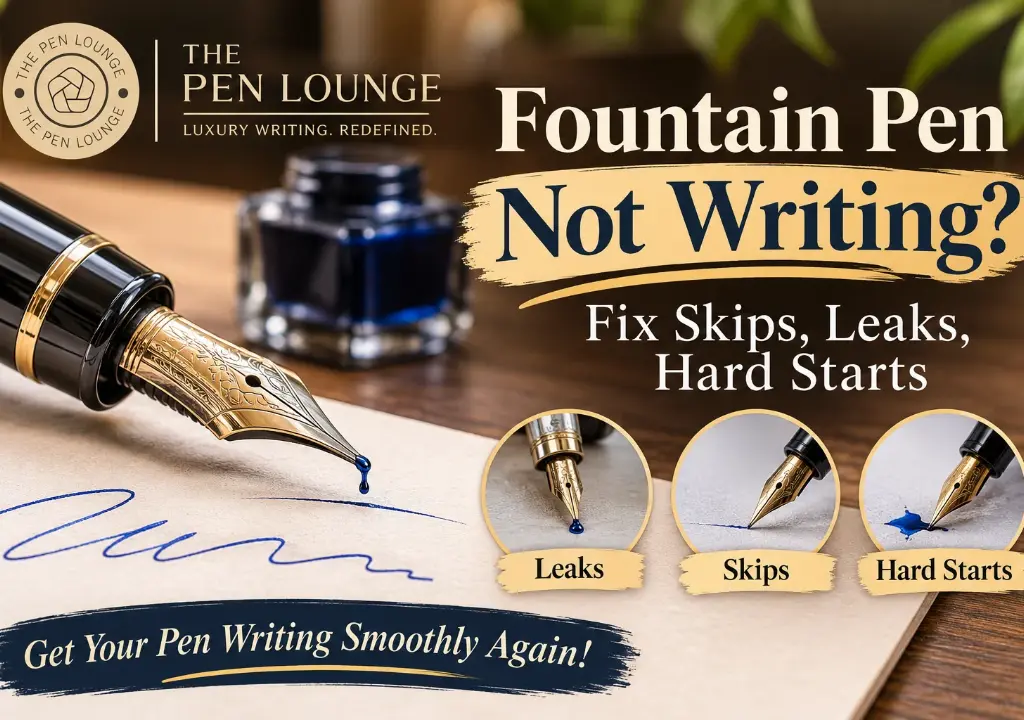
A fountain pen that skips, will not start or leaks is almost always fixable at home. This guide shows how to diagnose each problem, in order, from the simplest fix to the point where it is time to see a repairer. It is a practical fountain pen troubleshooting guide, with a symptom finder and a cleaning routine you can follow.
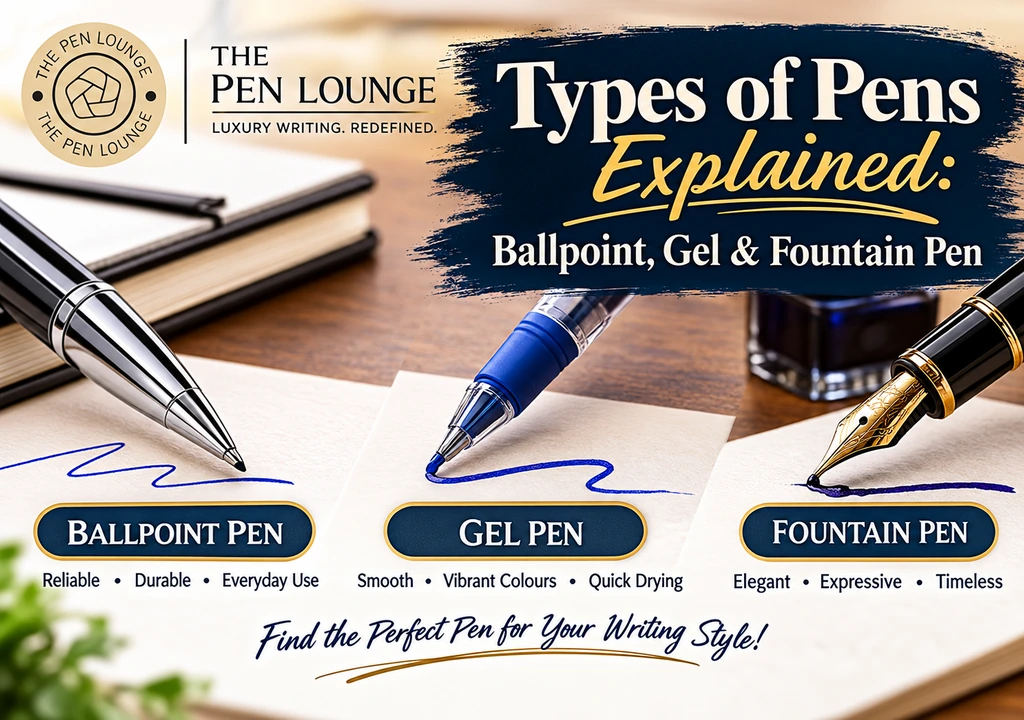
Every pen puts ink on paper, but they do it in very different ways. This guide explains the main types of pens, how each one works, what it is best at, and how to pick the right one for notes, exams, signatures, journaling or a gift.
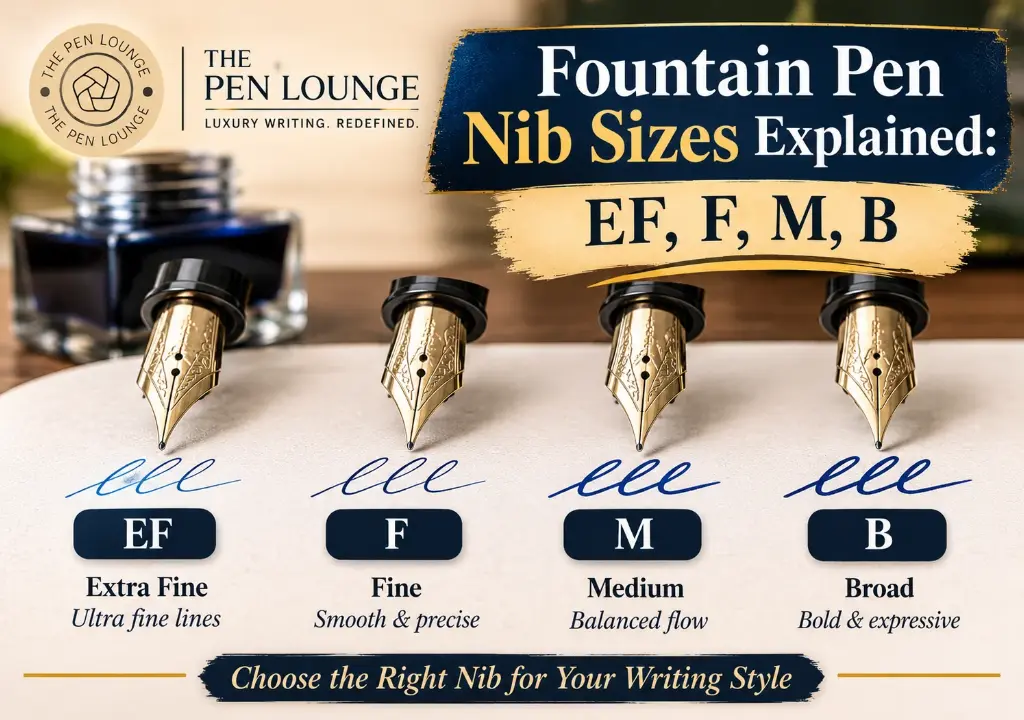
The nib size decides how thick your line is, how your handwriting looks and how the pen behaves on paper. This guide explains fountain pen nib sizes from extra fine to broad, plus stub, italic and flex nibs, and shows you how to choose one.
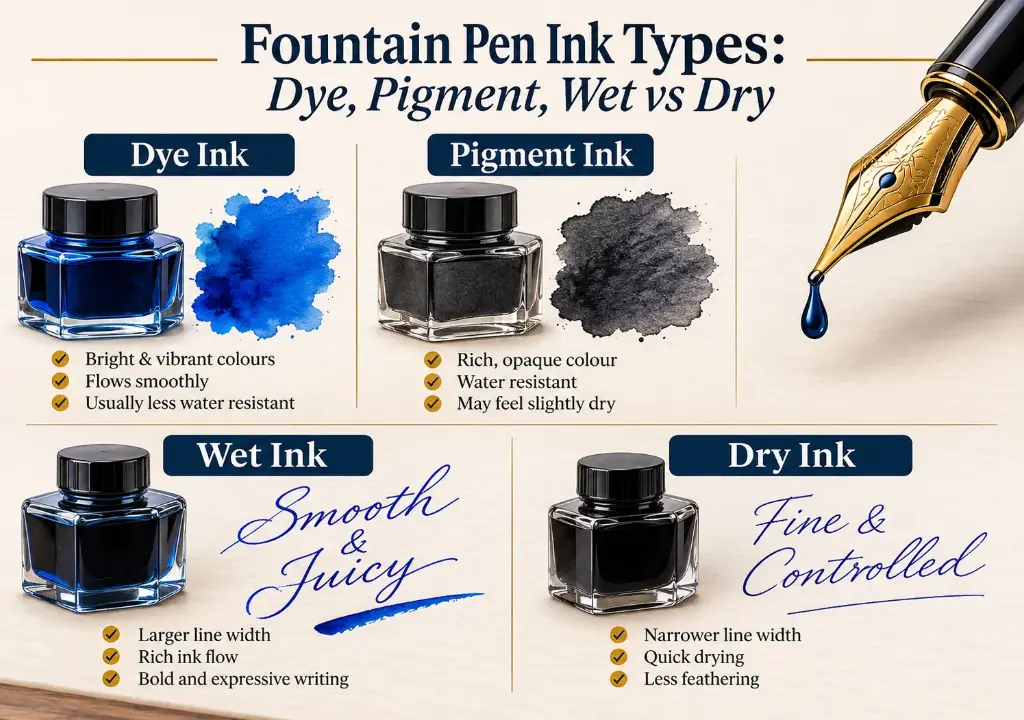
Not all fountain pen inks are the same. Some are dyes, some are pigments, some are iron gall, and some flow wet while others run dry. This guide explains the main fountain pen ink types in plain language, so you can pick an ink that suits your pen, your paper and the way you write.
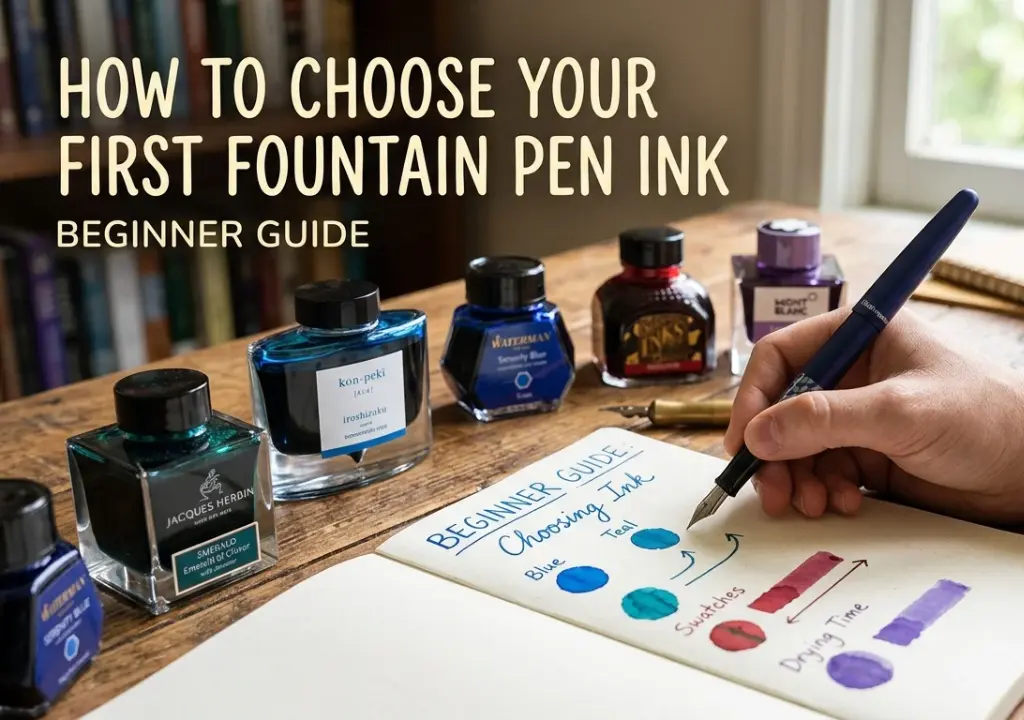
The best first fountain pen ink is a water-based dye ink in blue, blue-black or black, from a trusted brand, in a small bottle. It flows smoothly, cleans out easily and forgives beginner mistakes. Here is how to choose it in six simple steps, and which inks to avoid at the start.
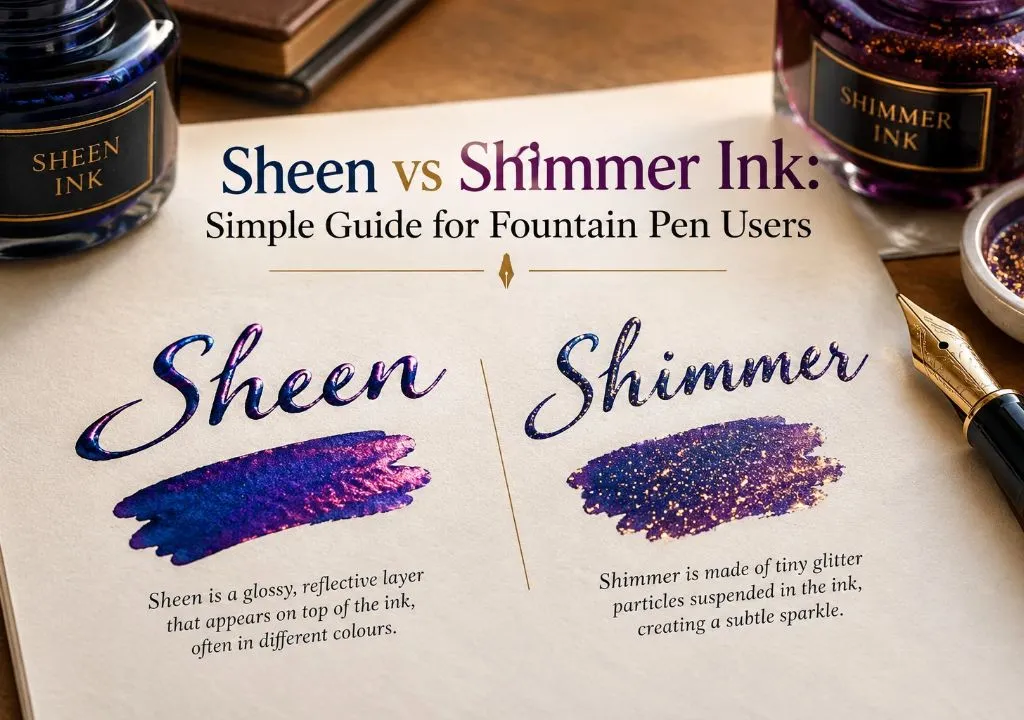
You open a bottle of fountain pen ink and the description says “shading, sheen and shimmer”. It sounds technical, but it isn’t. Sheen vs shimmer ink is one of the most common beginner questions, so here is the difference in plain words, and which kind to pick.