Blog
How to Choose Your First Fountain Pen Ink: Beginner Guide

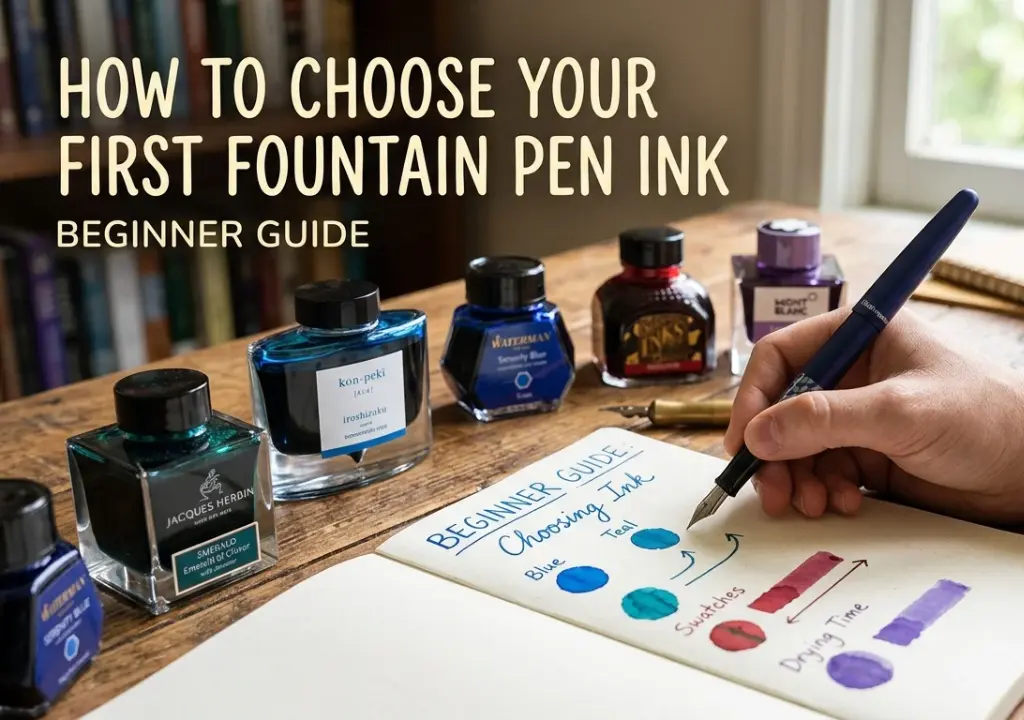
The best first fountain pen ink is a water-based dye ink in blue, blue-black or black, from a trusted brand, in a small bottle. It flows smoothly, cleans out easily and forgives beginner mistakes. Here is how to choose it in six simple steps, and which inks to avoid at the start.
- Your quick checklist
- Water-based, dye-based ink
- Blue, blue-black or black
- Made for fountain pens, from a trusted brand
- A small bottle of 30 to 50 ml

1. Choose a Dye-Based Ink
For a first ink, choose a dye-based ink. Dye inks dissolve fully in water, so they flow well and rinse out of the pen easily. That makes them the safest choice while you learn how your pen behaves.
Pigment inks are made of tiny solid particles. They can be very water-resistant, but they need more careful cleaning. Leave them to dry inside a pen and they may clog it.
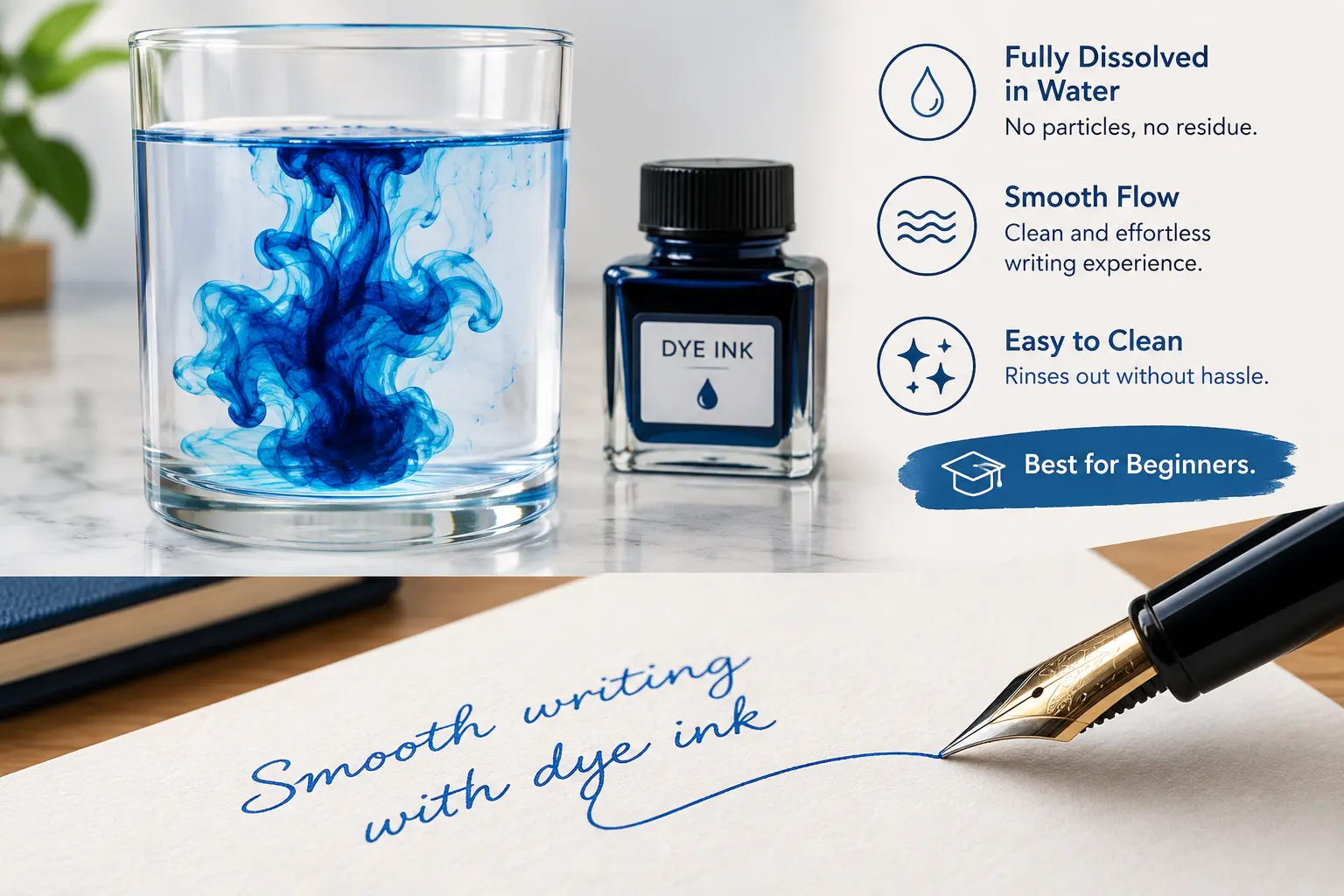
Dye ink
Colour fully dissolved in water. Smooth flow and easy to clean. Best for beginners.

Pigment ink
Tiny solid particles in the liquid. Very water-resistant but needs careful cleaning.
2. Pick a Colour You Will Use Every Day
Pick blue, blue-black or black for your first bottle. These colours look neat on paper, work for study and office use, and make it easy to see how your pen writes.
| If you want | Choose |
|---|---|
| Neat, professional writing | Blue-black or black |
| Everyday notes and journals | Classic blue or a dark teal |
| A little personality | A sheen ink such as a blue with a red glow |
| Marking and proofreading | Red or green, as a second bottle |

3. Check Flow and Drying Time
Good flow means the ink starts writing instantly and does not skip. A well-behaved ink also dries fast enough that you do not smudge your hand.
- Wet inks look rich and dark, but dry slower. They suit absorbent paper.
- Drier inks dry fast and suit left-handed writers and thin paper.
- If you are unsure, read the product description and look for words like “well-behaved” or “smooth flowing”.
4. Think About Water Resistance
Most dye inks wash away if the page gets wet. That is fine for journals and notes, but not for forms or addresses. Pick a water-resistant ink only if you need your writing to survive spills, and check the product page first. Some permanent inks such as iron gall ink need extra care, so wait until you have some experience.
5. Keep the Special Effects Simple
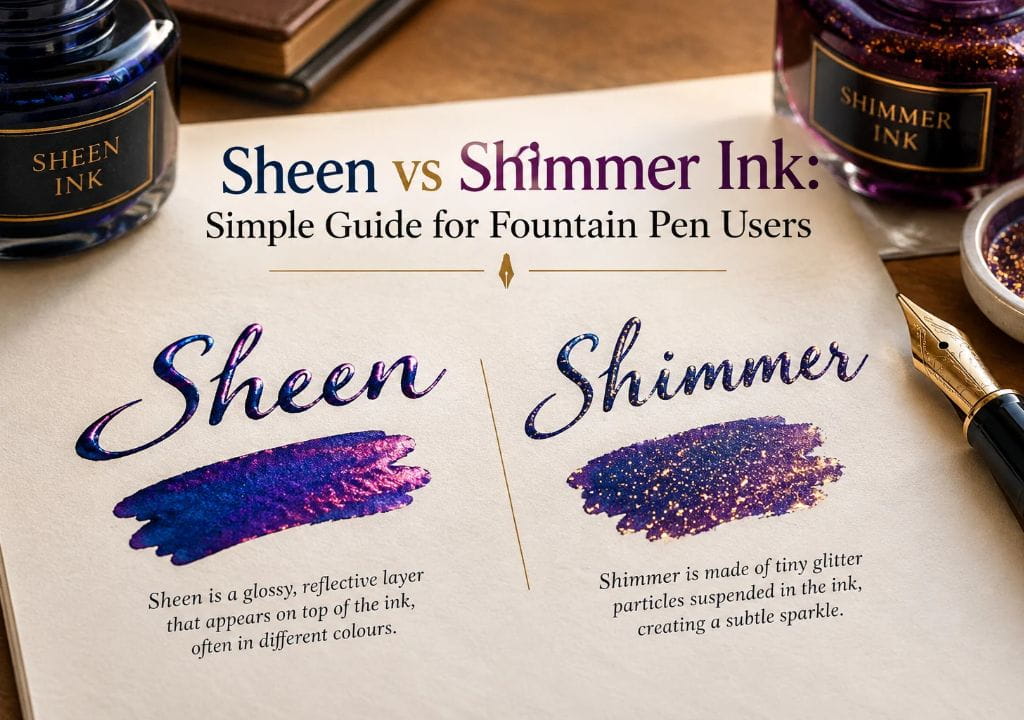
Shading and sheen are safe and fun for beginners. Shimmer inks add glitter particles, so save them for your second or third bottle. Our guide to sheen vs shimmer ink explains the difference in simple words.

6. Choose a Bottle or Cartridge
Use a bottled ink if your pen has a converter, piston or other refillable system. It costs less per refill and gives you far more colours. Use cartridges if you want zero mess, but you will have fewer colour choices.
Bottled ink
More colours, lower cost per refill. Needs a converter or refillable pen.
Cartridges
No mess and quick to swap. Fewer colour choices and higher cost per refill.
A 30 to 50 ml bottle is plenty for a beginner and lasts for months. Not sure how your pen fills? Read our guide to fountain pen filling systems first.
Inks to Avoid as a Beginner
- Drawing and calligraphy inks such as India ink. They are not made for fountain pens and can clog or damage them.
- Shimmer and pigment inks. Lovely, but they need more cleaning.
- Mixing different inks in one pen. Different formulas can react and clog the feed.
- Unknown inks with no brand or details. Buy from a seller who tells you what the ink is.
Our Beginner Picks
Browse our full range of fountain pen inks, or start with these:
- Alchemy Candy Sea: a royal blue with a red-purple sheen. A good everyday blue with some character.
- Alchemy Obsidian Sky: a black ink with a silver sheen and no glitter. A classic colour with a subtle twist.
- Diamine inks: a wide range of colours if you want to compare several.
Simple Tips for Your First Fill
- Flush a new pen with clean water before filling it for the first time.
- Test the ink on your own notebook. Paper changes how an ink looks and dries.
- Rinse the pen with clean water every few refills, and always before you change colour.
- Do not leave the pen uncapped, and store the bottle upright with the lid tight.
Frequently Asked Questions
What is the best ink for a first fountain pen?
A water-based dye ink in blue, blue-black or black from a trusted brand. It flows well, cleans easily and is forgiving for beginners.
Can I use any ink in a fountain pen?
No. Use ink made for fountain pens. Drawing, calligraphy and India inks can clog the pen and are not safe for it.
Is bottled ink better than cartridges?
Bottled ink gives you more colours and costs less per refill, but needs a converter or refillable pen. Cartridges are cleaner and simpler.
Should I start with sheen or shimmer ink?
Start with a sheen ink if you want something special. Shimmer ink needs more cleaning, so it is better for your second or third bottle.
How much ink should I buy first?
One bottle of 30 to 50 ml is plenty. It lasts for months and lets you learn your pen before you add more colours.
Final Thoughts
To choose your first fountain pen ink, keep it simple: pick a dye-based ink in blue, blue-black or black, buy a small bottle from a trusted brand, and test it on your own paper. Once you are comfortable, explore sheen and shimmer inks for something more colourful.
Read Next
- Sheen vs Shimmer Ink: Simple Guide for Fountain Pen Users
- The Complete Guide to Fountain Pen Filling Systems
Ready to choose your first ink?
Written by The Pen Lounge Ink Team. We test our inks in fountain pens and dip pens before they go on sale. Last updated: October 2026.