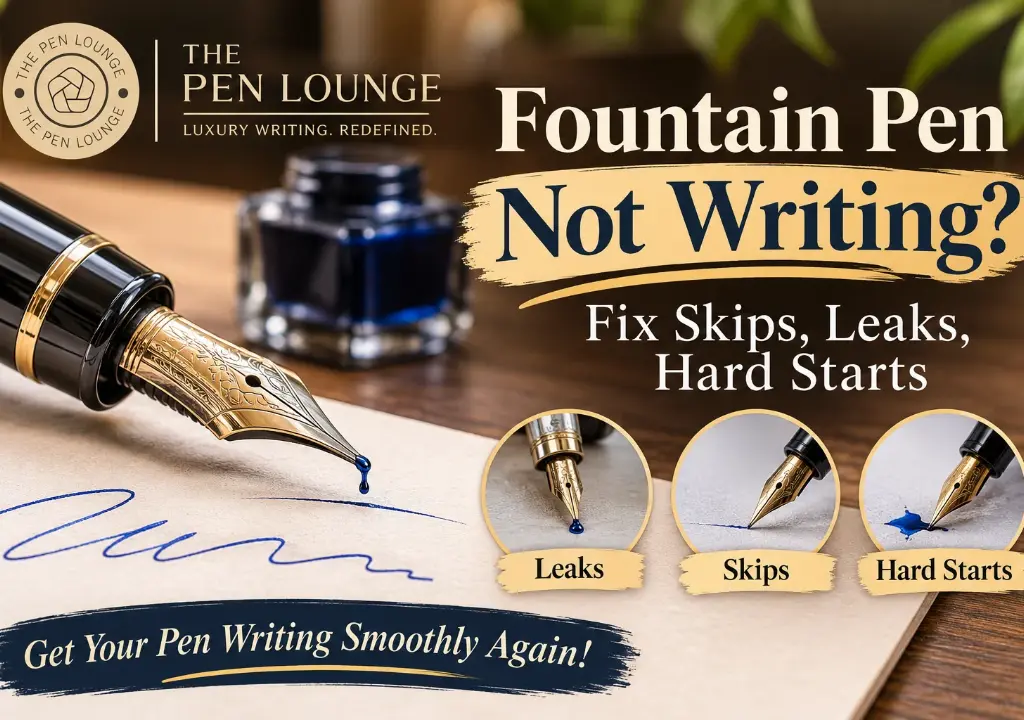
Fountain Pen Not Writing? Fix Skipping, Hard Starts, Leaks and Scratchy Nibs
A fountain pen that skips, will not start or leaks is almost always fixable at home. This guide shows how to diagnose each problem, in order, from the simplest fix to the point where it is time to see a repairer. It is a practical fountain pen troubleshooting guide, with a symptom finder and a cleaning routine you can follow.
By The Pen Lounge team | Updated 30 October 2026 | About 9 minutes to read
The short answer
Most problems come from dried ink, a dirty feed, the wrong ink or paper, or a loose fit. Check those first.
Start with the basics: check the ink, wipe the nib, flush with lukewarm water, and try a different paper.
Skipping and hard starts are usually dryness or grease. Leaks are usually loose threads, overfilling or air expansion.
Scratchy nibs are often pressure or angle, but misaligned tines need a repairer.
Never use hot water, alcohol or ammonia on old pens, and never force a stuck part.
Start here: five quick checks
Check the ink. Is there ink in the cartridge or converter? Is the cartridge fully pierced?
Wipe the nib with a soft cloth or damp tissue, then write on a scrap.
Try different paper. Greasy, coated or very rough paper can stop a pen from writing.
Flush the pen with lukewarm water until it runs clear (see the cleaning section below).
Look at the nib in bright light. The two tines should meet evenly at the tip with a tiny, even gap.
Symptom finder
What is your pen doing?
Pick a symptom for a quick fix, then read the full guide below.
Grease from fingers, hand cream or greasy paper on the nib.
An ink that flows too dry for your nib.
Misaligned tines or a nib not seated against the feed.
An air bubble in the feed.
Writing too fast, or holding the pen at a steep angle.
Fixes, in order
Flush the pen and refill with fresh ink.
Wipe the nib clean. A drop of dish soap in water on a soft cloth removes grease.
Try another paper and a wetter ink.
Hold the pen at roughly 45 degrees and write with light pressure.
If it still skips, look at the tines. Misalignment needs a repairer.
Hard starts: the pen will not write after sitting
The cap is not sealing properly, so the nib dries out.
The ink dries fast in the feed, especially in hot or dry weather.
The pen is stored in a position that lets ink drain away from the nib.
Touch the nib to a damp tissue and write a few slow lines. Keep the cap on firmly, write every few days, and consider a wetter ink. Storing the pen horizontally in a case can help. If the pen has been unused for weeks, see “Ink dried in the pen” below.
Scratchy or catching nib
Too much pressure, or a steep angle.
Rough or fibrous paper.
Misaligned tines, or worn or damaged tipping.
Very fine nibs, which give more feedback by nature.
Lighten your pressure and rotate the pen slightly to find the angle where the nib glides, known as the sweet spot. Try smoother paper. If the tines are uneven, ask a repairer. Do not sand or grind the nib yourself unless you know how. Our nib sizes guide explains how nibs differ.
Leaking, burping and ink on your fingers
Likely causes
The barrel threads are loose, or the cartridge is not seated.
A cracked cartridge, converter or section.
An overfilled converter, or a converter that is not tightly fitted.
Air expanding inside a half-empty pen, for example on a flight or in a hot bag.
Old rubber seals or sacs in a vintage pen.
Ink caught in the section threads, which transfers to your fingers.
Fixes
Tighten the barrel and check the cartridge or converter fit.
Wipe the section threads after every refill.
Do not fill to the brim, and carry pens nib-up in a pen case.
For flights, fill the pen completely or empty it.
A very small amount of pen-safe silicone grease on the threads can help some pens, but check the manufacturer’s advice first.
A leak from old seals or sacs needs a repair. See our pre-owned pen guide for what to check.
Ink too wet, feathering or smearing
This is usually an ink, nib or paper issue, not a fault. A very wet ink, a broad nib or absorbent paper can make lines spread and take longer to dry. Switch to a drier ink or a finer nib, or use better-sized paper. See our ink types guide and notebook buying guide.
Writes dry, faint or lightly
Dried ink or a partial clog in the feed.
The nib is not seated tightly against the feed.
An ink that flows dry in your pen.
The tines are pressed too tight together, or sprung apart.
Flush the pen thoroughly, then try a wetter ink. If it is still dry, the nib and feed alignment may need a repairer. Do not push or bend the nib to “open it up”.
Cartridge not flowing
Push the cartridge on firmly until the seal pierces. You often hear a soft click.
Hold the pen nib-down for a minute and tap it gently.
Do not squeeze the cartridge hard.
Make sure it is the right format for your pen. See our cartridge guide.
If ink still does not move, remove the cartridge and flush the section.
Ink dried in the pen
Ink can dry in the feed if a pen sits unused for weeks, especially with pigment or shimmer inks. It is usually fixable:
Rinse the section under lukewarm running water.
Soak the nib and section in lukewarm water for a few hours. For stubborn ink, add a tiny drop of dish soap or use a pen flush solution.
Use a converter to draw water through the nib, then expel it. Repeat until it runs clear.
Dry the section nib-down on a tissue, then refill with fresh ink.
How to flush a fountain pen
Cartridge or converter pen: remove the cartridge and rinse the section under lukewarm water. Fit a converter and draw up water, then expel it, until it runs clear.
Piston filler: dip the nib in water and cycle the piston several times. Do not disassemble the mechanism.
Dry it: stand the section nib-down on a tissue. Pat the outside dry.
Vintage, lever or sac pens: rinse gently and do not soak for long. See our used pen cleaning guide.
What not to use
Avoid hot water, alcohol, ammonia, bleach and ultrasonic cleaners on old pens. Hot water and strong solvents can warp celluloid, ebonite and rubber sacs. When in doubt, use lukewarm water only.
Maintenance schedule
When
What to do
Every refill
Wipe the nib and section, and check the threads.
Every 2 to 4 refills
Flush with lukewarm water. Do it more often with pigment or shimmer ink.
When changing ink
Do a full flush before the new ink goes in.
Every month or two
Check threads, seals and the cap for wear.
Pen not in use
Write a little every week, or empty, clean and store the pen dry.
Before travel
Fill the pen fully or empty it. Carry it nib-up in a case.
Storing your pen and ink
Keep pens capped, away from direct sun and hot places such as a parked car.
Use a pen case for travel, and keep ink bottles upright and tightly closed.
In dry weather ink dries faster in the nib, so cap the pen firmly when you pause.
Use the pen regularly. A pen that is used is a pen that stays clean.
When to see a repairer
Bent, sprung or misaligned tines.
Cracks in the section, barrel or cap.
A hardened or broken sac, or a stuck or leaking piston.
A loose nib or feed.
Anything that needs force to open or move.
A good repairer can often save an old pen for a modest cost. If you are buying a used pen, our buyer’s checklist helps you spot trouble before you pay.
Have a pen you no longer use? See what it could sell for.
The most common causes are an empty or unpierced cartridge, dried ink in the feed, grease on the nib, or poor paper. Check the ink, wipe the nib, flush with lukewarm water and try another paper.
Why does my fountain pen skip?
Usually from dried ink, grease on the nib, too-dry ink, or misaligned tines. Flush the pen, clean the nib and try a wetter ink. If it still skips, a repairer should check the tines.
Why is my fountain pen leaking?
Loose threads, a cracked cartridge, overfilling, or air expanding in a half-empty pen are the usual causes. Tighten the barrel, fill carefully, and have old seals checked.
How often should I clean my fountain pen?
Flush it every 2 to 4 refills, whenever you change ink, and more often with pigment or shimmer ink. Rinse it before storing it for a long time.
Can I use hot water to clean a fountain pen?
No. Lukewarm water is safer. Hot water can warp plastics, celluloid and rubber parts, especially in vintage pens.
Can a dried-out fountain pen be revived?
Often yes. Soak the nib section in lukewarm water for a few hours, flush it until the water runs clear, and refill. Stubborn pigment ink may need a pen flush solution.
Can I fix a bent nib myself?
We do not recommend it. Bending metal can split the tipping or ruin alignment. A repairer who knows nibs can usually fix it far more safely.
Why does my fountain pen smudge?
Wet ink, a broad nib or smooth paper keep ink on the surface longer. A drier ink and finer nib help. See our ink types guide.
The Pen Lounge team. We sell pens, notebooks and journals from Thane, and write these guides for people choosing their first or next pen. Questions? Visit the shop or tell us what you would like covered next.
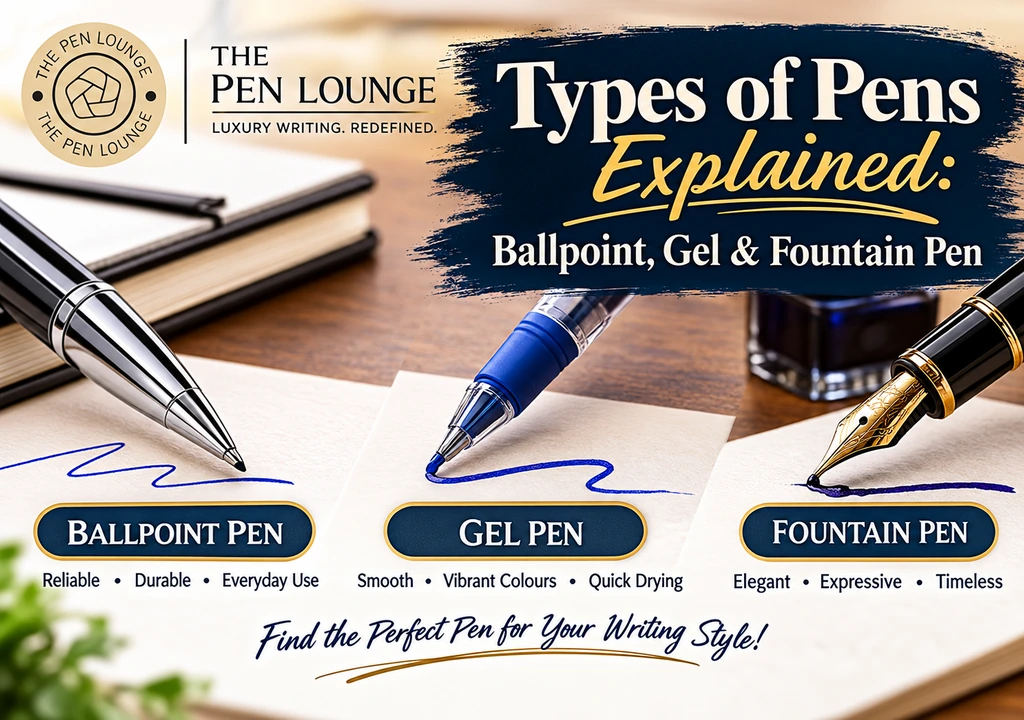
Every pen puts ink on paper, but they do it in very different ways. This guide explains the main types of pens, how each one works, what it is best at, and how to pick the right one for notes, exams, signatures, journaling or a gift.
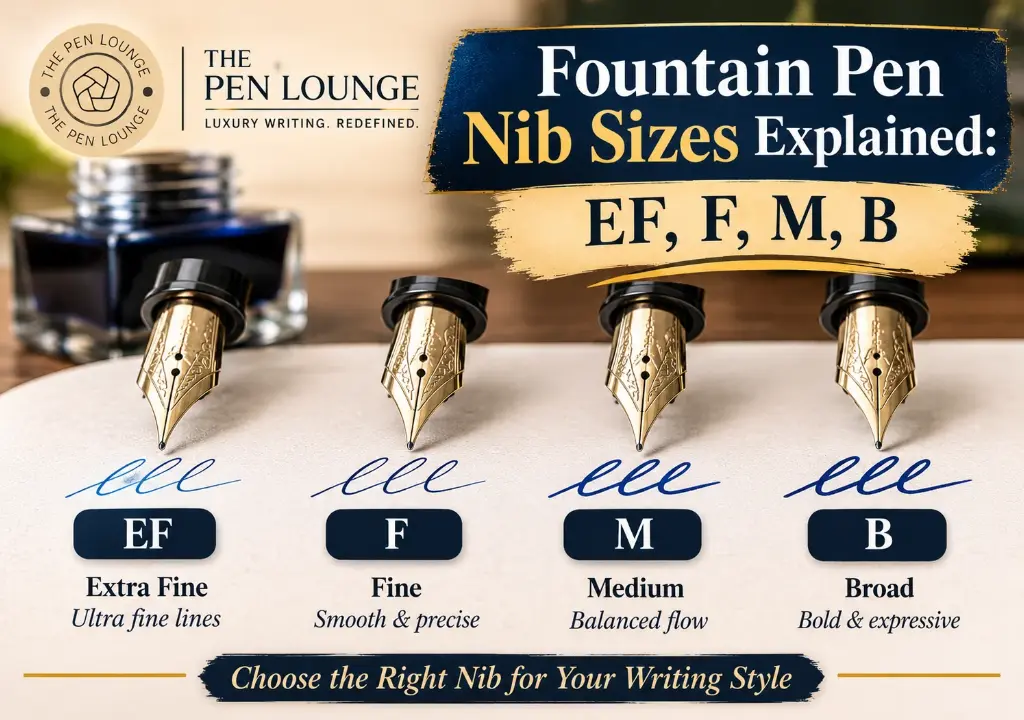
The nib size decides how thick your line is, how your handwriting looks and how the pen behaves on paper. This guide explains fountain pen nib sizes from extra fine to broad, plus stub, italic and flex nibs, and shows you how to choose one.
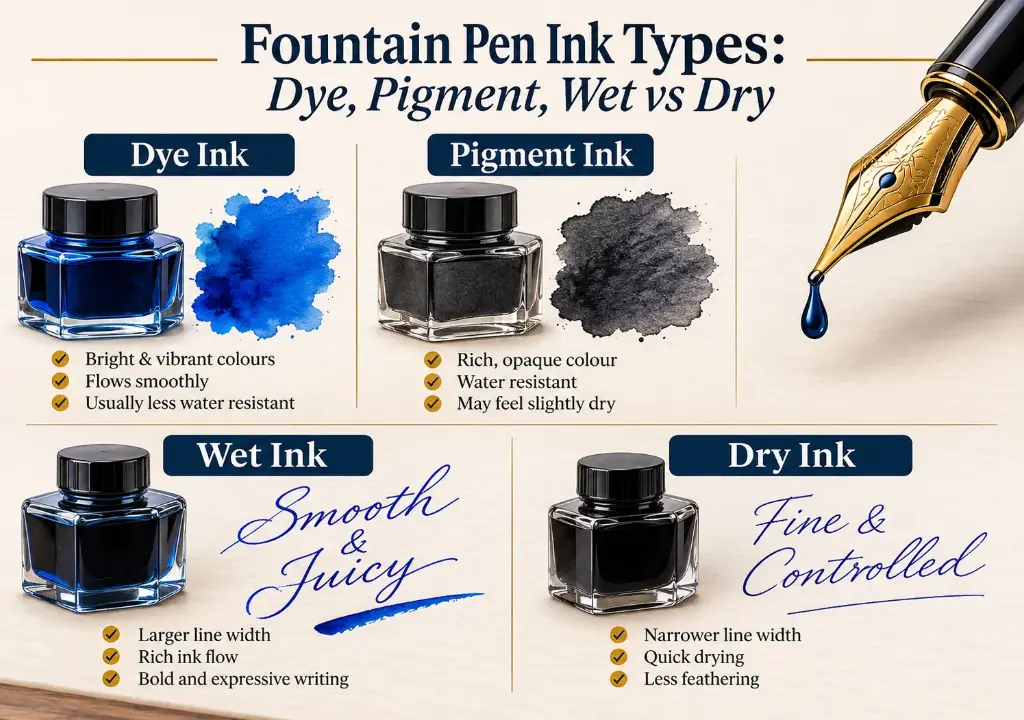
Not all fountain pen inks are the same. Some are dyes, some are pigments, some are iron gall, and some flow wet while others run dry. This guide explains the main fountain pen ink types in plain language, so you can pick an ink that suits your pen, your paper and the way you write.
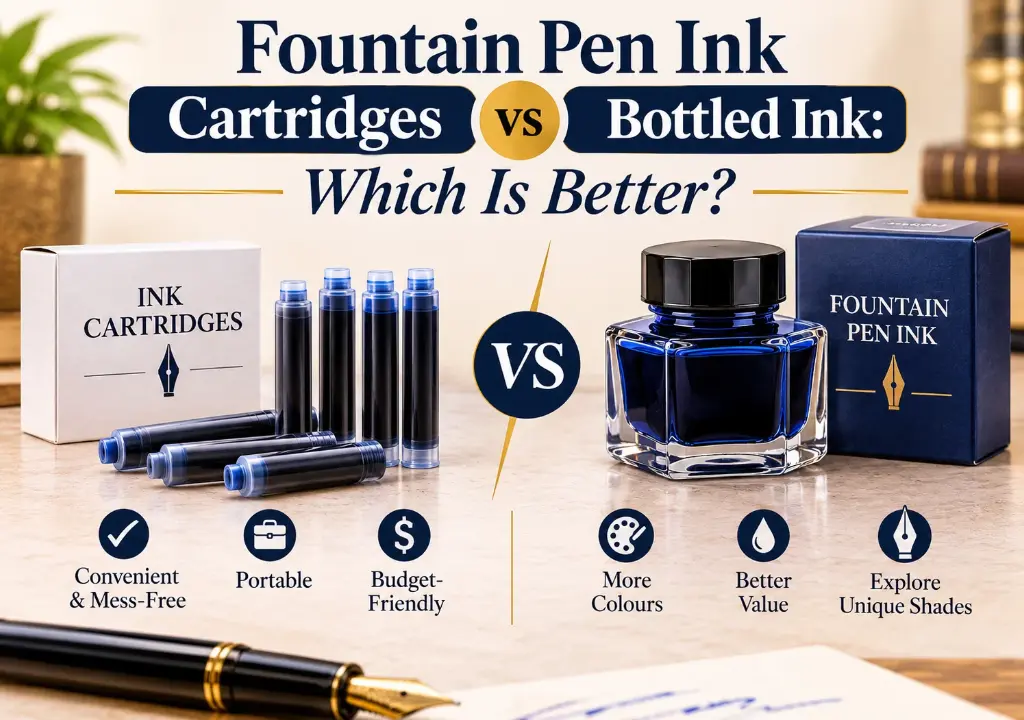
A fountain pen can drink from a sealed cartridge or from a bottle through a converter. Both work well. This guide explains the real differences in cost, mess, colour choice and compatibility, so you can choose the right fountain pen ink cartridges or bottled ink for your pen and your routine.
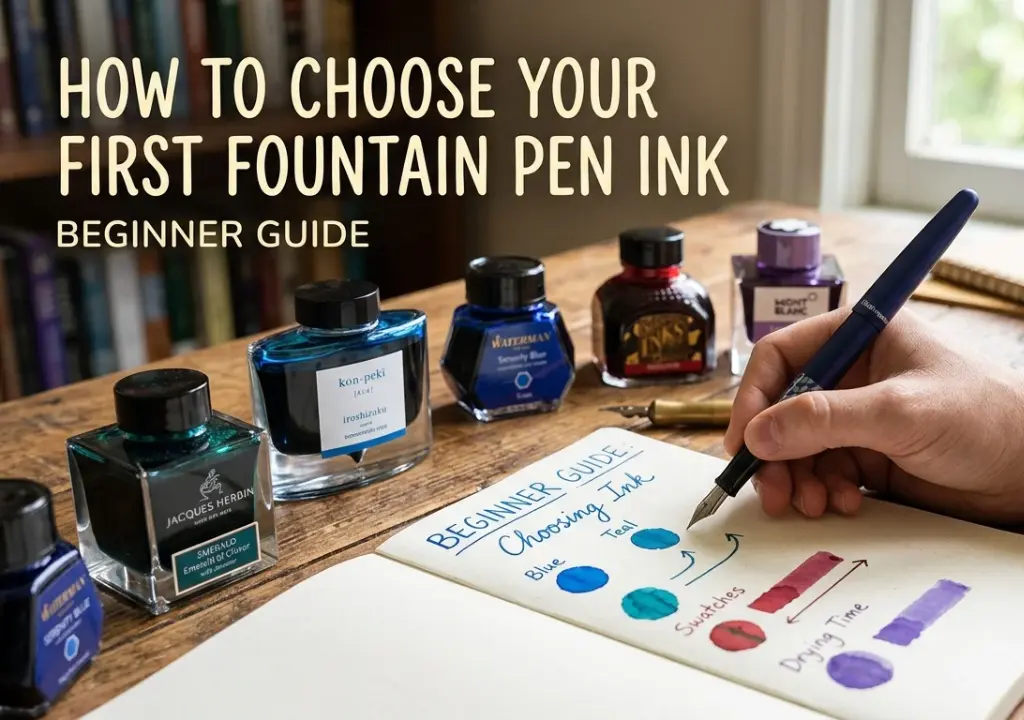
The best first fountain pen ink is a water-based dye ink in blue, blue-black or black, from a trusted brand, in a small bottle. It flows smoothly, cleans out easily and forgives beginner mistakes. Here is how to choose it in six simple steps, and which inks to avoid at the start.
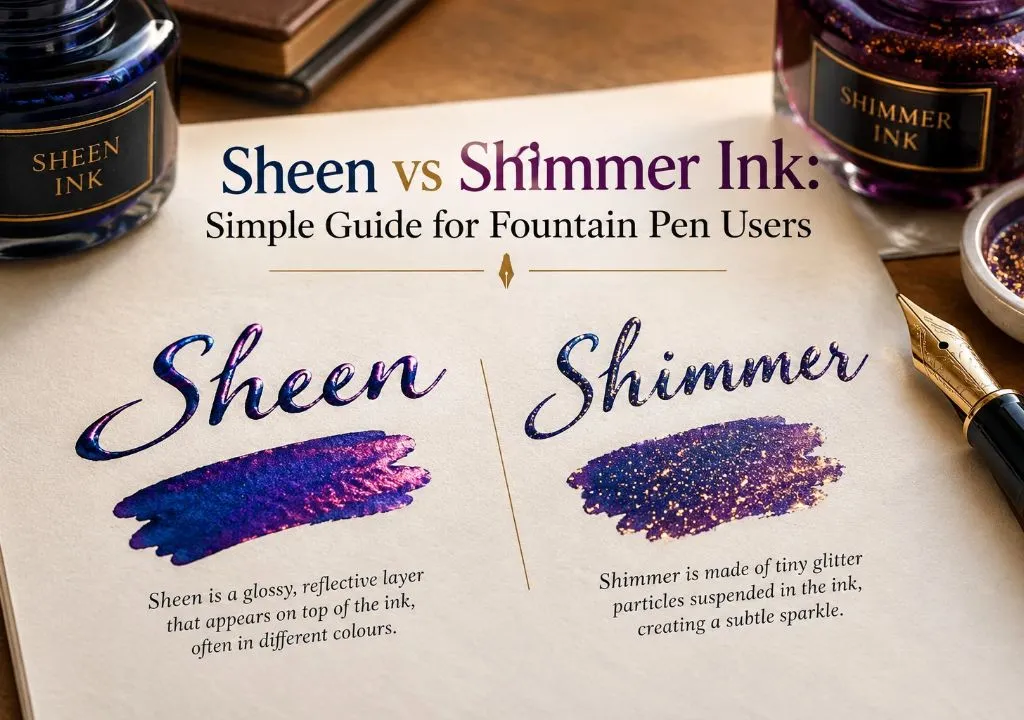
You open a bottle of fountain pen ink and the description says “shading, sheen and shimmer”. It sounds technical, but it isn’t. Sheen vs shimmer ink is one of the most common beginner questions, so here is the difference in plain words, and which kind to pick.