

Blog
How to Install Ink Cartridges in a Fountain Pen: A Complete Beginner’s Guide

How to Install Ink Cartridges in a Fountain Pen (Complete Beginner’s Guide)
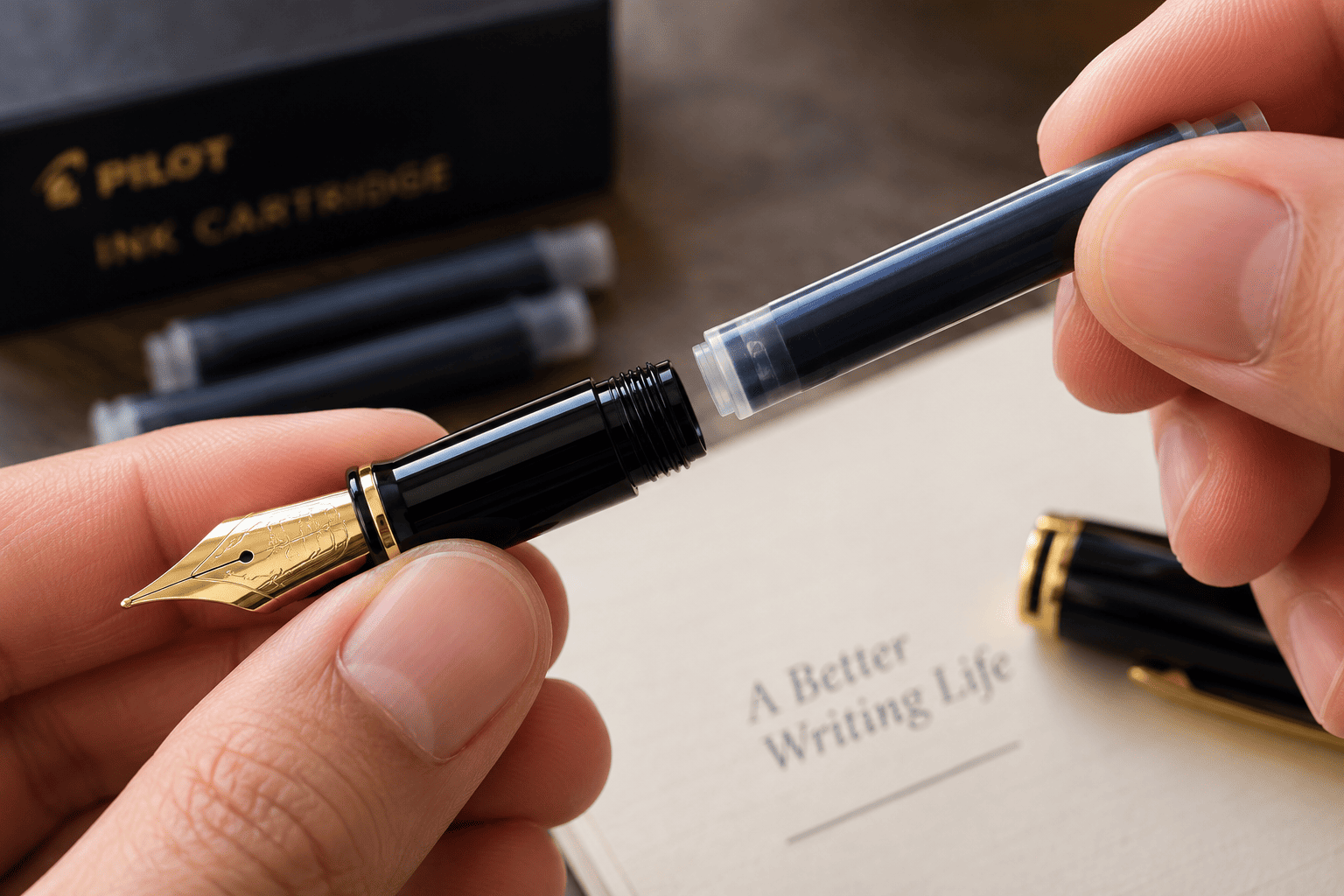 [close-up of cartridge being inserted into pen grip]
If you’re new to fountain pens, ink cartridges are by far the easiest way to get started. There’s no bottle to spill, no syringe to fumble with — just a small tube of ink that clicks into place. In this guide, we’ll walk through exactly how to install a fountain pen cartridge, the mistakes that trip up most beginners, and a few pro tips to keep your pen writing smoothly from the very first stroke.
Why Use Cartridge-Fill Fountain Pens?
Cartridge-fill pens are the go-to choice for anyone who wants the writing experience of a fountain pen without the mess of bottled ink. They’re portable, beginner-friendly, and quick to swap when a color runs dry — which is exactly why so many people search for best fountain pens for beginners before making their first purchase.
The same cartridge system is also used in many refillable brush pens and felt-tip markers, so once you learn the technique, you can apply it across most of your pen collection.
Step 1: Identify the Cartridge Opening
Every cartridge has one end designed to be punctured — look for a cup-shaped rim, sometimes with a small metal or plastic ball inside. That ball isn’t just a seal; once punctured, it becomes an agitator bead that helps ink flow more evenly by breaking up surface tension inside the tube.
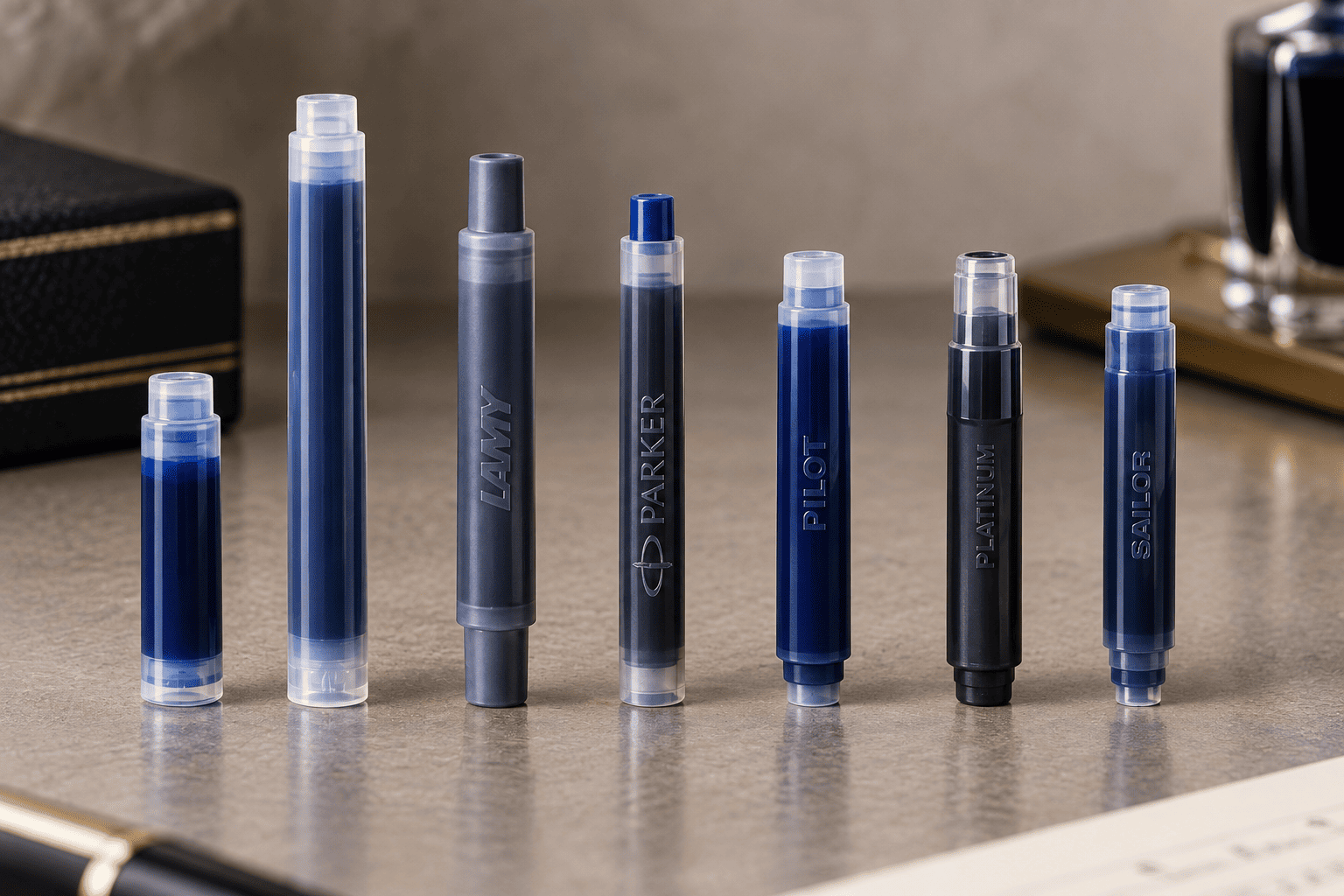 common cartridges from different manufacturers side by side
Cartridges aren’t universal. Many pens use the standard international cartridge size (short or long), while others — often higher-end brands — require proprietary cartridges made specifically for that model. Before buying refills, check your pen’s product page or manual to confirm compatibility.
Step 2: Disassemble the Pen
Unscrew the barrel
Unscrew the barrel from the grip section. Inside the grip, you’ll usually see a small plastic point — this is part of the pen’s feed, the component responsible for carrying ink from the cartridge to the nib.
Step 3: Insert and Puncture the Cartridge
Insert and press firmly
Place the cartridge’s opening end into the grip section, then push down firmly until you feel it puncture. This usually takes more pressure than people expect — don’t be afraid to apply steady force.
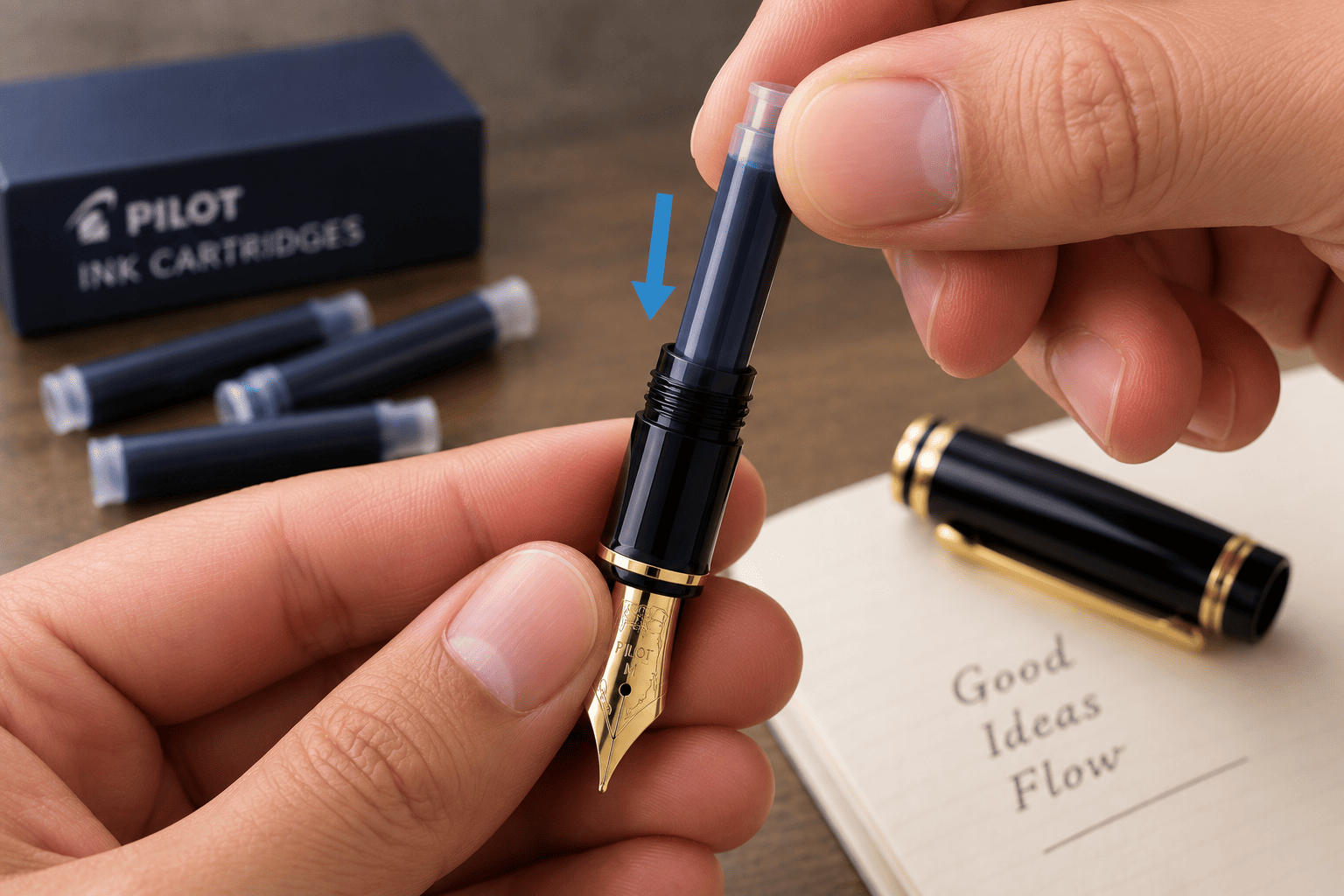 hand pressing cartridge into grip section
Step 4: Let the Ink Saturate the Feed
Point the nib downward and wait
Once the cartridge is in, point the pen’s nib downward and let gravity do the work. It can take one to two hours for ink to fully saturate the feed. This waiting period is the reason so many beginners assume a new pen is “not writing” when really it just needs time.
Common Ink Cartridge Problems (and How to Fix Them)
| Problem | Likely Fix |
|---|---|
| Pen won’t write after installing a cartridge | Give it more time nib-down, or gently squeeze the cartridge / dab the nib in water |
| Cartridge won’t puncture | Confirm you’re using the cup-rim end and apply firmer, steadier pressure |
| Ink looks inconsistent or clumpy | Time to clean your fountain pen, especially after switching ink colors |
| Cartridge doesn’t fit | Double-check the correct cartridge size for your pen model |
How Often Should You Clean a Cartridge Pen?
Even if you’re not switching ink colors, it’s good practice to clean your fountain pen every one to two months. If you are switching to a different ink, always flush the pen first — leftover ink residue can clog the feed or subtly shift your new ink’s color.
- Flush with cool water until it runs clear
- Let the pen air-dry nib-down for a few hours
- Avoid hot water — it can warp plastic feeds and seals
Ink Cartridges vs. Other Fountain Pen Filling Systems
Cartridges are just one of several ways to fill a fountain pen. Piston fillers, converters, and eyedroppers each offer different trade-offs between convenience, ink capacity, and color flexibility. If you’re deciding which filling system fits your habits best, our Guide to Fountain Pen Filling Systems compares all your options in more depth.
For additional technical background on how fountain pens work, see Wikipedia’s overview of the fountain pen.
Frequently Asked Questions
No. Many use the standard international size, but several major brands (like Lamy, Pilot, and Platinum) use proprietary cartridges that only fit their own pens.
Almost always, this means the feed hasn’t fully saturated yet. Leave the pen tip-down for 1–2 hours before troubleshooting further.
Standard disposable cartridges aren’t designed to be refilled, though some hobbyists do it with a syringe. For an easier refill experience, a converter is a better long-term option.
This varies by pen, nib size, and writing habits, but most standard cartridges last anywhere from a few weeks to a couple of months of regular use.
Ready to refill your fountain pen? Browse our full range of compatible ink cartridges.