
Fountain Pen Education, Pen & Ink Guides, Pen Troubleshooting

What Is Pigment Fountain Pen Ink? Benefits, Uses, and Why It’s Special

Fountain pen users often hear about pigment fountain pen ink, but many people are not sure how it works or why it is special. If you enjoy writing, sketching, or signing important documents, understanding this type of ink can help you choose the right ink for your needs. In this guide, we’ll explain what pigment fountain pen ink is, how it works, and why many writers and artists prefer it.

What Is Pigment Fountain Pen Ink?

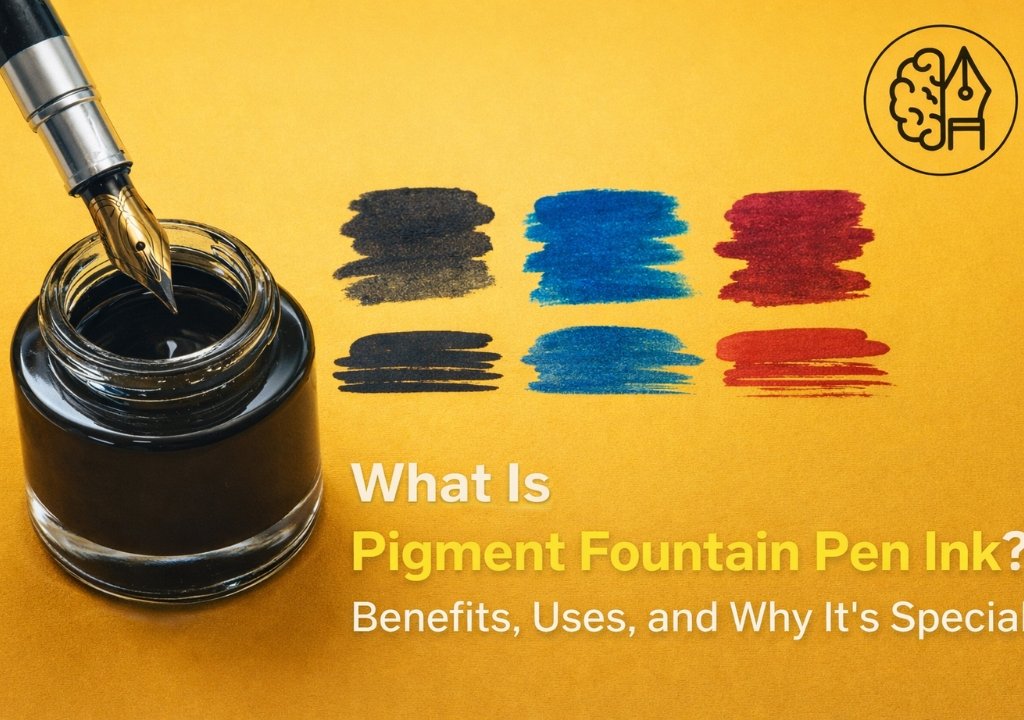
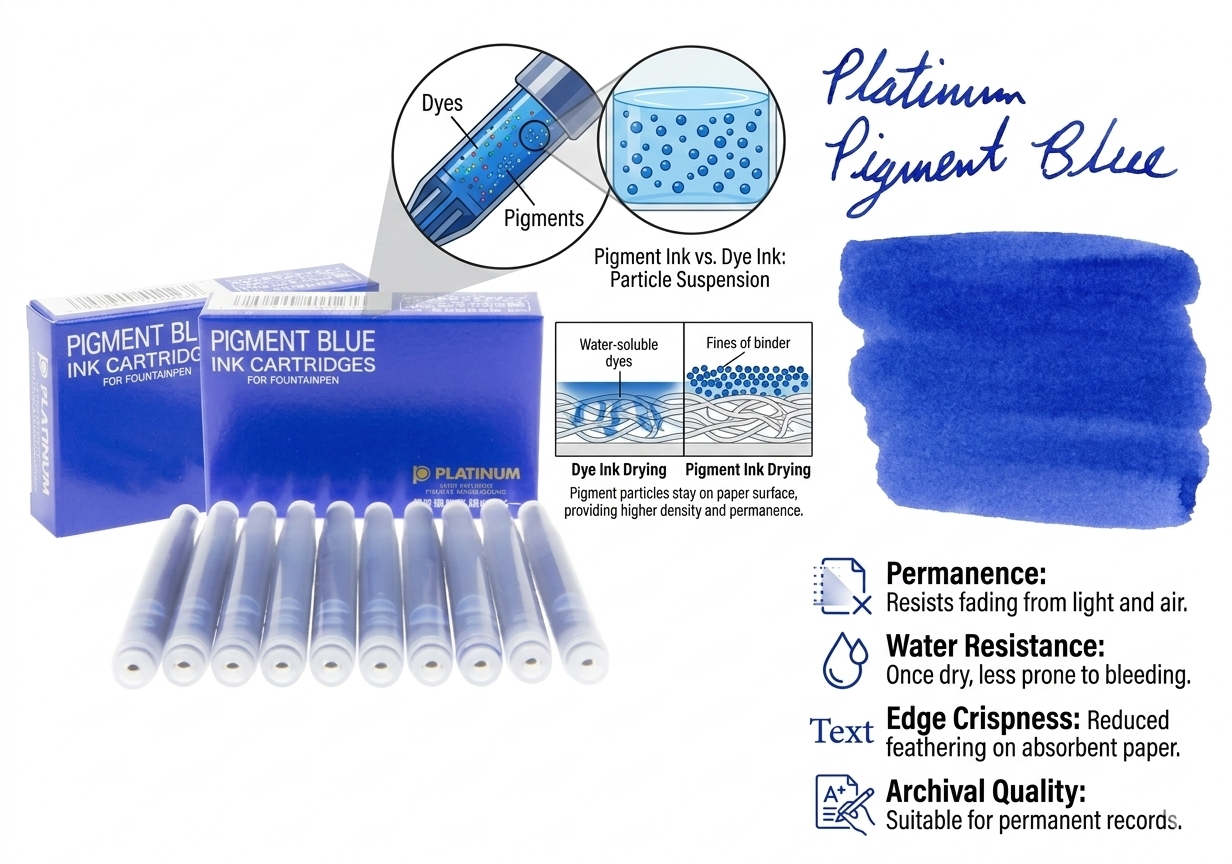
Pigment fountain pen ink is a type of ink that contains very fine solid color particles suspended in water. These particles are called pigments. Unlike traditional fountain pen inks that use water-soluble dyes, pigment inks contain microscopic particles that sit on the surface of the paper once the ink dries. Because of this structure, pigment ink offers several advantages, especially for long-lasting writing and archival documents.

Pigment Ink vs Dye-Based Fountain Pen Ink

When choosing fountain pen ink, one of the most important things to understand is the difference between pigment ink and dye-based ink. Both types of ink are commonly used in fountain pens, but they behave differently because of how they are made. Pigment fountain pen ink contains tiny solid color particles suspended in water. These microscopic pigment particles remain on the surface of the paper once the ink dries, creating a layer that is resistant to water and fading. This makes pigment ink an excellent choice for archival writing, official documents, and artwork where durability is important.

On the other hand, dye-based fountain pen ink works differently. Instead of containing solid particles, dye ink uses color molecules that dissolve completely in water. Because the color is fully dissolved, dye inks tend to flow very smoothly through fountain pens and often produce brighter, more vibrant colors. However, dye inks are usually less resistant to water and light, which means the writing may fade over time or smear if exposed to moisture.

Due to these differences, pigment inks are valued for their permanence, waterproof qualities, and long-lasting performance, while dye-based inks are appreciated for their smooth writing experience and wide range of vivid colors. Many fountain pen enthusiasts choose pigment inks when they want their writing to last for years without fading, especially for important notes, journaling, or artwork. Dye inks, on the other hand, are often preferred for everyday writing because they require less maintenance and are easier to clean from fountain pens.

Key Benefits of Pigment Fountain Pen Ink

1. Waterproof Writing

One of the biggest advantages of pigment ink is its water resistance. Once the ink dries, it stays on the page even if exposed to water.

This makes it ideal for:

  • Important documents

  • Journals

  • Signatures

  • Outdoor sketching


2. Excellent Lightfastness

Pigment ink is known for lightfastness, which means it resists fading when exposed to light.

Many artists and calligraphers prefer pigment ink because their work stays dark and clear for many years.


3. Strong Opacity

Pigment inks often produce deep, rich colors with strong opacity. This makes writing appear more bold and professional on paper.

For example, black pigment inks are often used for:

  • Legal documents

  • Archival writing

  • Professional signatures


4. Ideal for Artwork and Illustration

Pigment fountain pen ink is popular among artists who create:

  • Line drawings

  • Ink sketches

  • Technical illustrations

  • Mixed media artwork

Because the ink is waterproof, artists can add watercolor or washes over the drawing without smudging the lines.

When Should You Use Pigment Fountain Pen Ink?

Pigment ink is a great choice if you need long-lasting, permanent writing.

Common uses include:

Signing official documents

Archival journaling

Professional note-taking

Fountain pen artwork

Things to Know Before Using Pigment Ink

While pigment inks offer excellent durability, they also require a little more care.

Clean Your Pen Regularly

Pigment particles can build up over time, so it’s important to clean your fountain pen occasionally.

Use a Good Quality Fountain Pen

Most modern fountain pens handle pigment inks well, but regular maintenance helps maintain smooth flow.

Shake the Bottle Gently

Since pigments are suspended particles, gently shaking the ink bottle before filling your pen helps keep the color consistent.

💡 Did You Know?

Did you know that pigment fountain pen ink contains microscopic solid color particles rather than dissolved dyes? These tiny pigment particles stay suspended in water and settle onto the paper surface when the ink dries. Because of this structure, pigment inks are highly valued for their waterproof properties, excellent lightfastness, and long-lasting durability.

Final Thoughts

Pigment fountain pen ink combines durability, water resistance, and long-lasting color. Whether you are signing important documents or creating artwork, this type of ink provides dependable performance.If you enjoy the world of fountain pens and fine writing, exploring pigment inks can add a new level of quality and permanence to your writing experience.

If you love fountain pens, you’re writing history with every word.

Leave a Reply