Fountain Pen Education, Pen & Ink Guides, Pen Troubleshooting

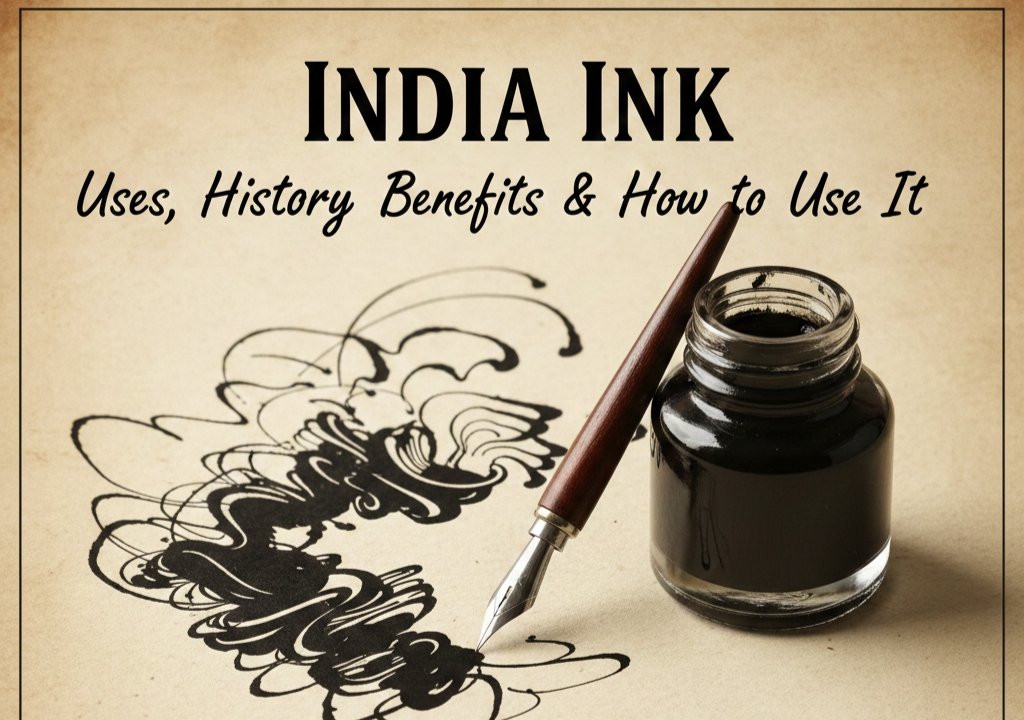
What Is India Ink? Uses, History, Benefits & How to Use It

India ink is one of the most classic and reliable inks used in art and design. It is famous for its deep, rich black color and its ability to last for many years without fading. Artists and writers have trusted India ink for centuries because of its strong, permanent finish and smooth performance. This ink has been traditionally used for drawing, calligraphy, brush painting, and technical illustration. Even today, it remains a favorite choice for professionals as well as beginners who want clean lines and high contrast in their work. From detailed pen drawings to expressive brush strokes, India ink offers great control and consistent results. One of the main reasons India ink is so popular is its permanence. Once it dries, it becomes water-resistant and does not smudge easily. This makes it perfect for artwork that needs to last a long time or be reproduced digitally, such as comics, illustrations, and design sketches. If you are new to art or exploring traditional tools, learning about India ink can help you understand why it has remained relevant for generations. In this blog, we will explore what India ink is, how it is used, and why it is still an essential material for artists and calligraphers today.

What Is India Ink?

India ink (also called Indian ink or China ink) is a black ink made from carbon black pigment mixed with water and a binder.

Key Characteristics:

  • Deep, rich black color

  • Waterproof and permanent when dry

  • Smooth flow for pens and brushes

  • Long-lasting and fade-resistant

History of India Ink

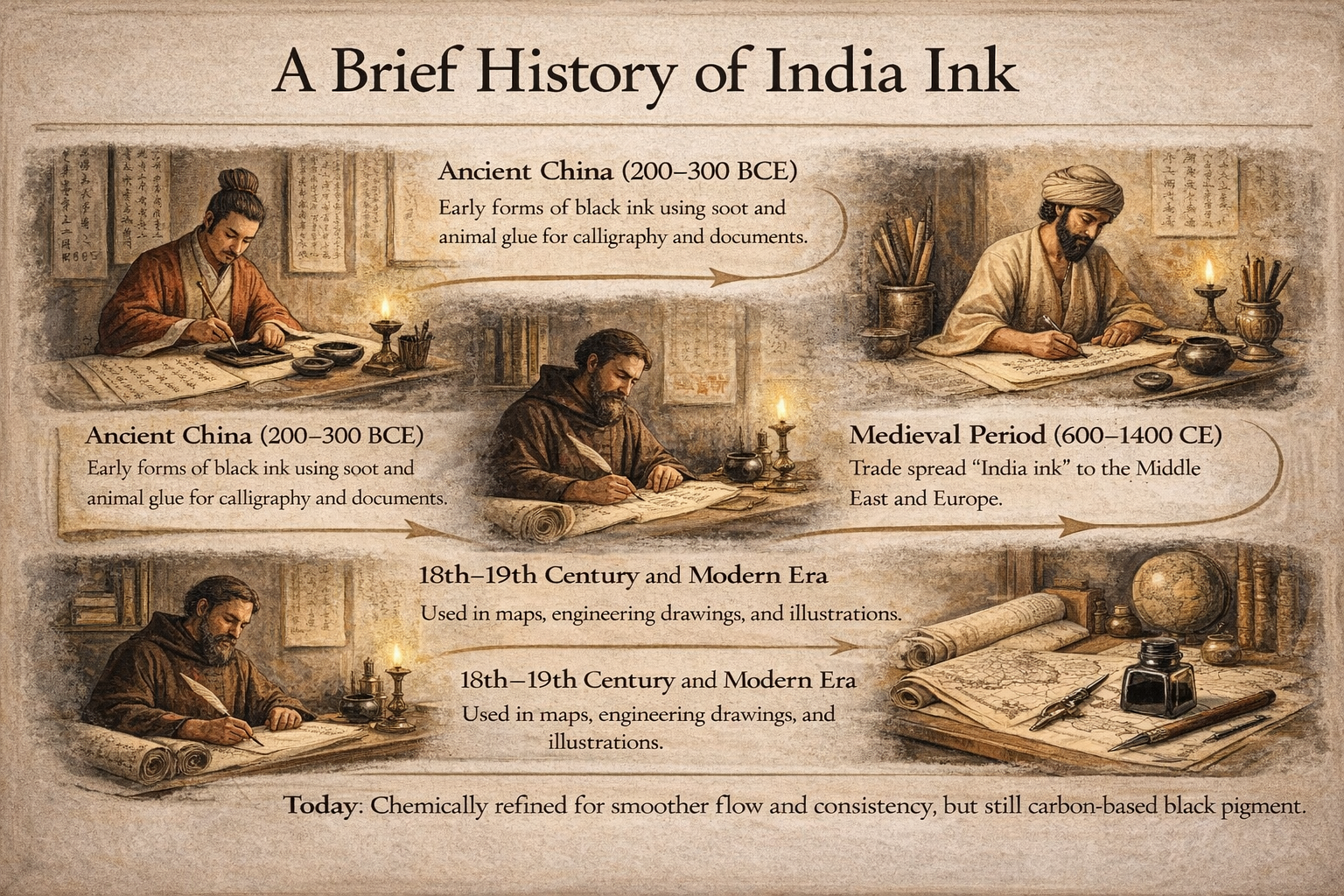
India ink has a rich history that goes back more than 2,000 years.

  • Around 200–300 BCE (Ancient China):
    Early forms of black ink were developed using soot from pine wood or oil lamps, mixed with water and animal glue. These inks were used for calligraphy, painting, and official documents.

  • Around 300–500 CE (India):
    Similar ink-making techniques appeared in India, where black ink was used for manuscripts, religious texts, and illustrations. Through trade, this ink became known to other regions.

  • Medieval Period (600–1400 CE):
    India ink spread to the Middle East and Europe via trade routes. European traders began calling it “India ink”, believing it came mainly from India.

  • 18th–19th Century:
    India ink became widely used in maps, engineering drawings, and scientific illustrations due to its strong contrast and permanence.

  • Modern Era:
    Today’s India ink is chemically refined for smoother flow and consistency, but it still follows the same core idea: carbon-based black pigment that lasts for generations.

Common Uses of India Ink

India ink is widely used because it produces strong, clear, and permanent black lines. Its versatility makes it suitable for many creative and professional fields. Below are the most common and highly searched uses of India ink, explained in a simple way.

🎨 Drawing & Illustration

India ink is one of the most popular choices for artists who work with line-based drawings. It allows for sharp details, smooth outlines, and strong contrast.

Artists commonly use India ink for:

  • Line art and contour drawings

  • Ink sketches and detailed illustrations

  • Comic art and graphic novels

  • Manga and black-and-white artwork

Because the ink is permanent and waterproof once dry, artists can add watercolor or ink washes on top without smudging the lines. This makes India ink ideal for layered artwork.


✒️ Calligraphy & Lettering

India ink has been used in calligraphy for centuries due to its rich black tone and smooth flow.

It is commonly used for:

  • Traditional calligraphy styles

  • Modern hand lettering

  • Brush calligraphy

  • Decorative writing and typography

Calligraphers prefer India ink because it creates clean strokes with strong contrast, which helps letters stand out clearly on paper.


🖌️ Brush Work & Ink Painting

India ink works beautifully with brushes, allowing artists to create both bold and subtle effects.

It is often used for:

  • Expressive brush strokes

  • Ink wash techniques

  • Traditional ink paintings

  • Shading and tonal artwork

By diluting India ink with water, artists can achieve different shades of gray, from light washes to deep black tones. This makes it a powerful tool for expressive and creative artwork.


📐 Technical & Professional Illustration

India ink is also widely used in technical and professional fields because of its precision and durability.

Common applications include:

  • Architectural drawings

  • Engineering sketches

  • Scientific and medical diagrams

  • Technical illustrations for textbooks

The ink’s ability to produce crisp, non-fading lines makes it perfect for drawings that need to be accurate, readable, and long-lasting.


🖨️ Reproduction & Digital Scanning

Another important reason India ink is widely used is its suitability for reproduction.

  • High contrast makes it easy to scan

  • Lines remain clear in photocopies

  • Ideal for print and digital publishing

This is why India ink is commonly used in comics, books, instructional manuals, and design layouts.


Why India Ink Is Still So Popular

India ink continues to be a top choice because it:

  • Works across multiple art forms

  • Produces deep, permanent black lines

  • Is reliable for both artistic and technical use

  • Has remained relevant despite digital tools

Why Artists Love India Ink ?

India ink remains popular because of its unique benefits:

  • ✔ Permanent and waterproof

  • ✔ Extremely dark black tone

  • ✔ Works with dip pens, brushes, and technical pens

  • ✔ Ideal for high-contrast artwork

  • ✔ Affordable and widely available

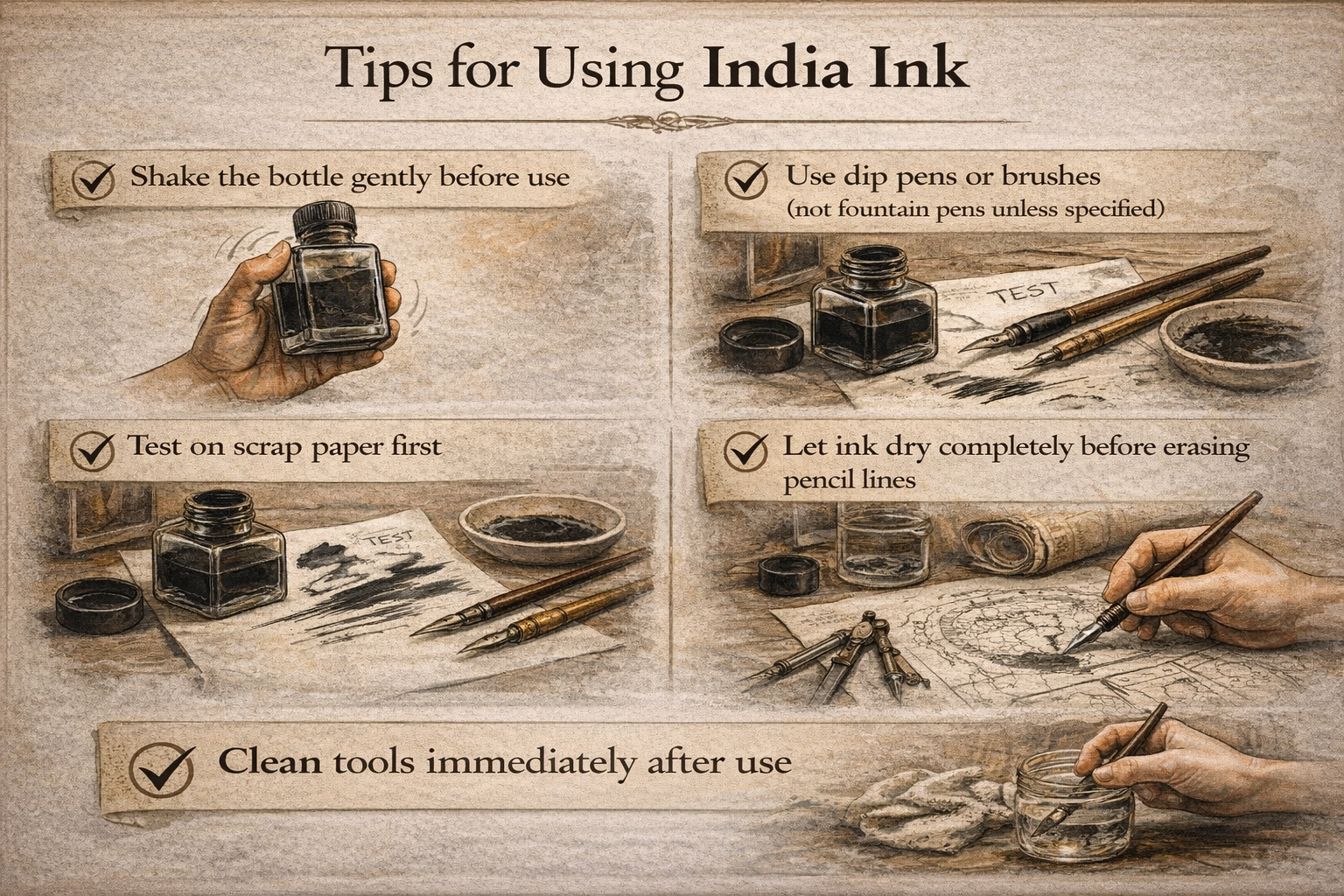
How to Use India Ink ?

Modern Iron Gall inks are much safer than their historical counterparts. However, they still require mindful use:

India Ink vs Other Inks: What’s the Difference?

When choosing the right ink, many people compare India ink with other common inks such as fountain pen ink or general writing ink. While they may look similar in liquid form, their performance, purpose, and durability are very different.

India Ink vs Fountain Pen Ink

India ink is a carbon-based, permanent black ink that becomes waterproof once it dries. This makes it ideal for drawing, illustration, calligraphy, brush work, and technical drawings. Because of its permanence, India ink does not smudge when water, markers, or washes are applied over it. This is why it is widely used by artists, illustrators, architects, and designers who need bold, long-lasting lines.

Fountain pen ink, on the other hand, is designed mainly for everyday writing. It is usually water-based and dye-based, which means it flows smoothly through fountain pens but is not waterproof. When exposed to water, fountain pen ink can blur or wash away. While it is excellent for journaling, note-taking, and letters, it is not suitable for artwork that requires permanence.

Permanence and Waterproof Quality

One of the biggest differences between India ink and other inks is permanence. India ink is known for its high resistance to fading, smudging, and water damage. This makes it perfect for archival artwork, professional illustrations, and documents meant to last for many years.

Most regular inks, including fountain pen ink, have medium to low permanence. They are easier to erase, correct, or wash off, which can be useful for writing but limiting for professional art and technical use.

Color Depth and Visual Impact

India ink is famous for its very dark, rich black color. The carbon pigment creates strong contrast, making lines appear crisp and sharp even after scanning or printing. This is why India ink is often used in comics, graphic novels, technical manuals, and publishing.

In comparison, fountain pen ink comes in many colors, but its black shades vary in depth and are usually less intense than India ink. Over time, some dye-based inks may fade, especially when exposed to light.

Conclusion

ndia ink is a timeless medium that continues to inspire artists around the world. Its deep black color, permanence, and versatility make it perfect for drawing, calligraphy, and technical work. If you’re looking for a reliable ink that delivers professional results, India ink is an excellent choice.


Leave a Reply