Blog
Did You Know? What “Feedback” Means in Fountain Pens
Fountain pens are loved not just for how they look, but for how they feel on paper. One term that often comes up among fountain pen users is “feedback.” Unlike ballpoint pens, fountain pens create a tactile connection between nib and paper — and feedback plays a key role in that experience. In this guide, we’ll explain what feedback is, why it matters, and how it affects writing comfort and control.
What Is “Feedback” in a Fountain Pen?
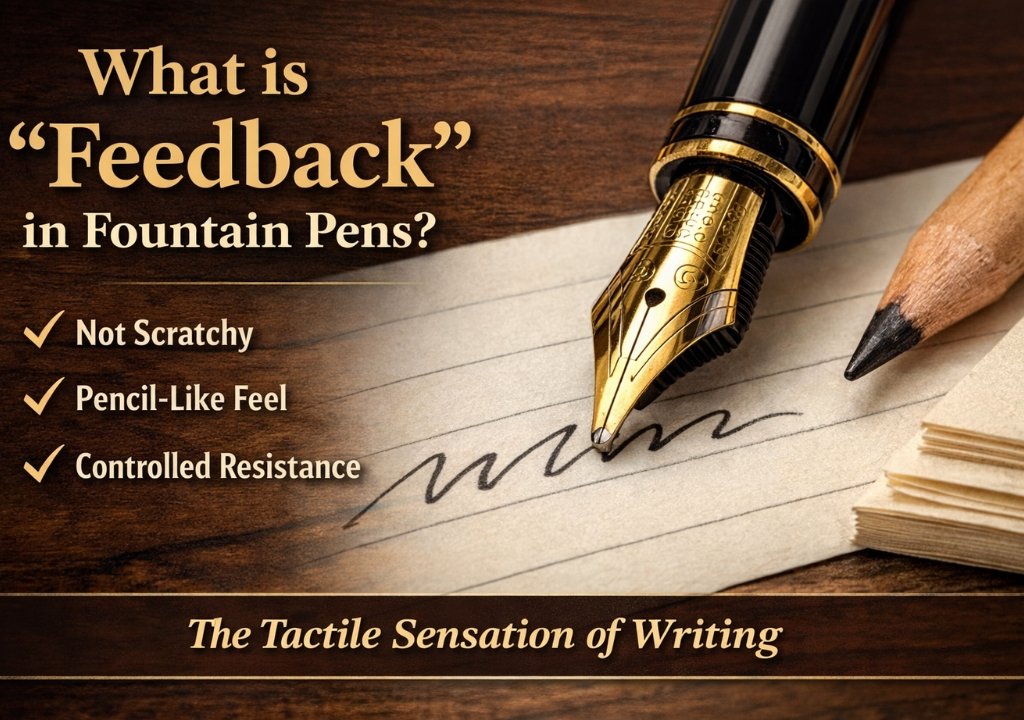
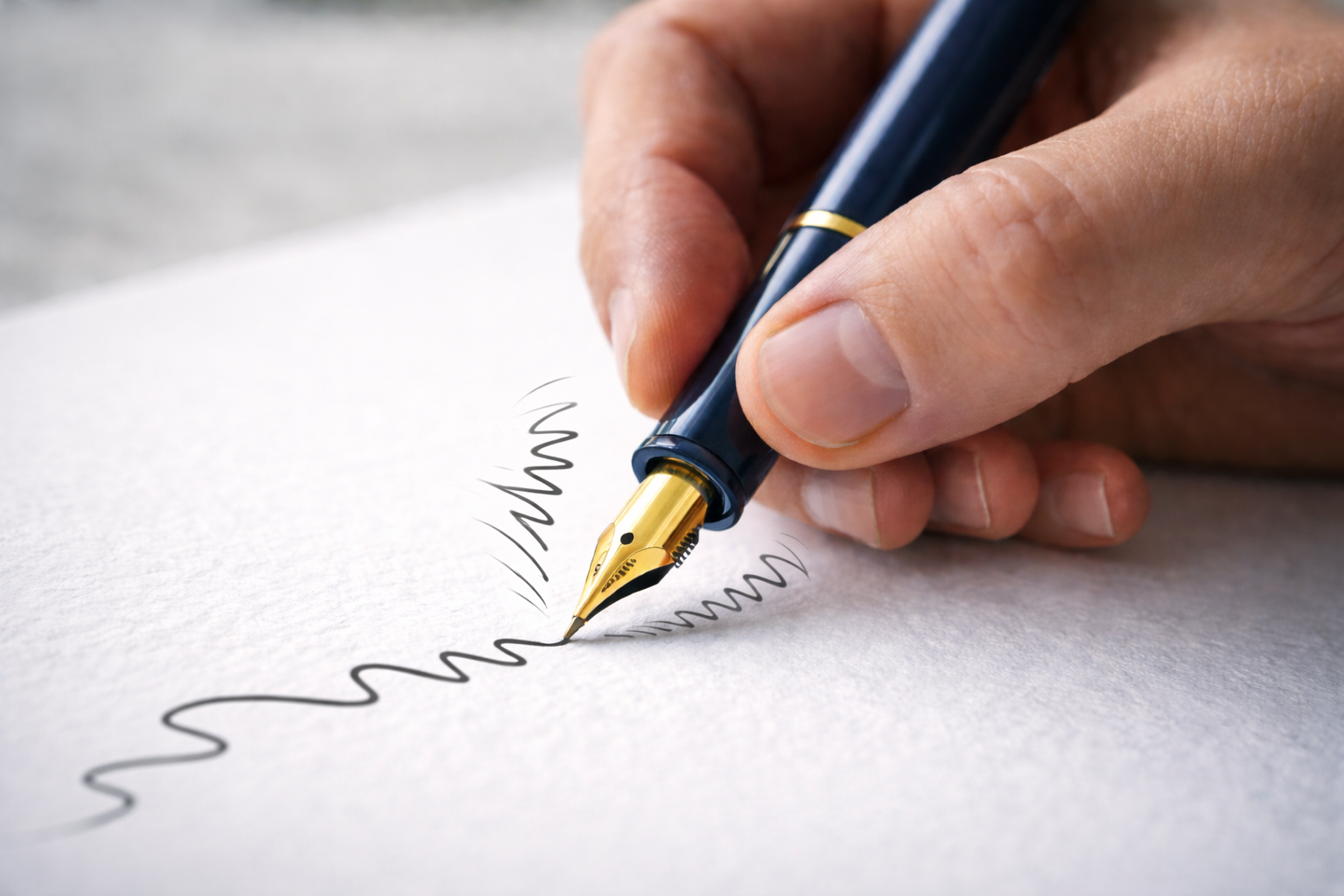
Feedback refers to the tactile sensation you feel when the nib touches the paper while writing. It’s the subtle resistance, texture, or vibration that travels from the nib through the pen into your fingers. Think of it as the pen “talking back” to you as you write. Importantly, feedback is not a flaw and it is not the same as scratchiness.
Feedback vs. Scratchiness (Very Important Difference)
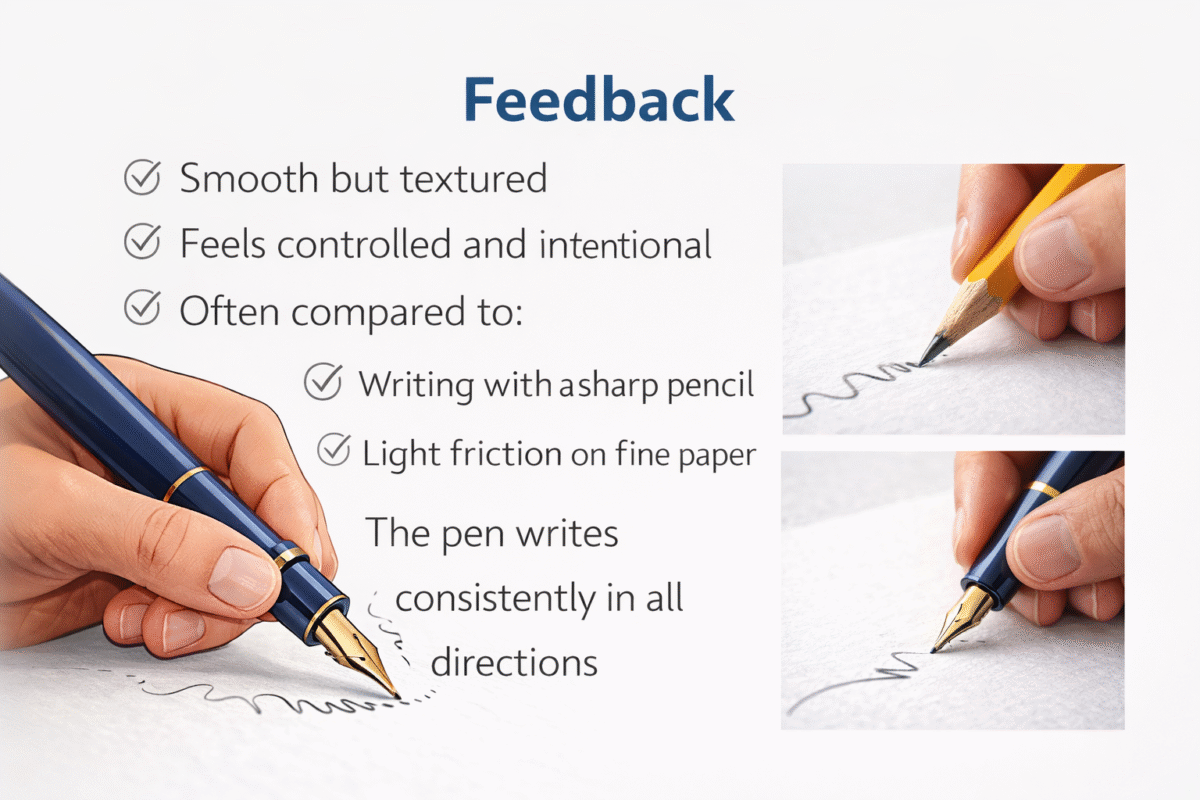
Feedback
-
Smooth but textured
-
Feels controlled and intentional
-
Often compared to:
-
Writing with a sharp pencil
-
Light friction on fine paper
-
-
The pen writes consistently in all directions
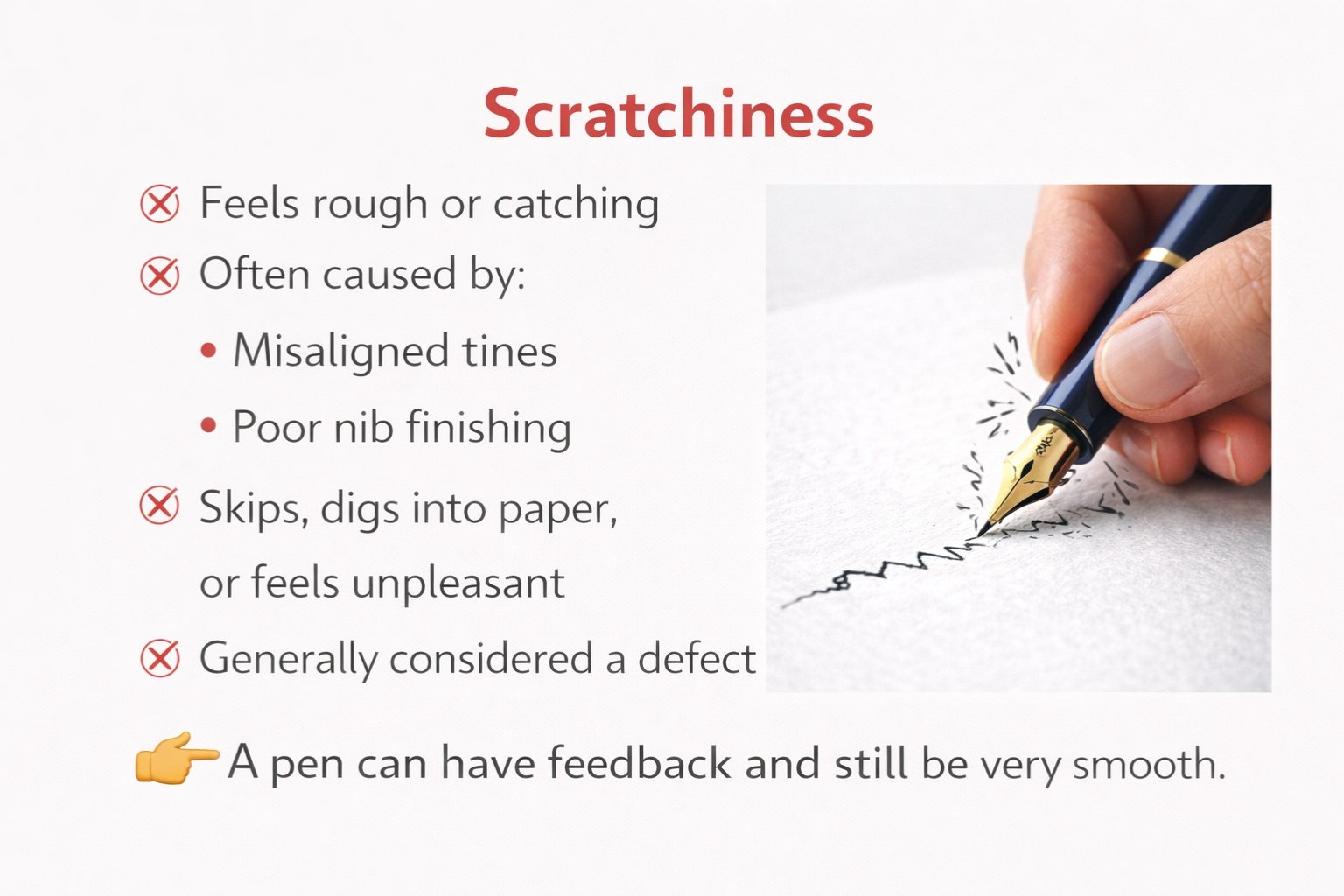
Scratchiness
-
Feels rough or catching
-
Often caused by:
-
Misaligned tines
-
Poor nib finishing
-
-
Skips, digs into paper, or feels unpleasant
-
Generally considered a defect
👉 A pen can have feedback and still be very smooth.
Why Do Some Fountain Pens Have Feedback?
Feedback comes from a combination of factors:
1. Nib Material and Finish
-
Highly polished nibs = less feedback (glassy smooth)
-
Less polished or finely shaped nibs = more feedback
-
Some manufacturers intentionally leave a slight texture
2. Nib Size
-
Extra-fine (EF) and fine (F) nibs often have more feedback
-
Broad and stub nibs usually feel smoother due to more surface contact
3. Paper Choice
-
Smooth coated paper reduces feedback
-
Textured paper increases it
-
Feedback changes depending on what you write on
4. Writing Pressure and Angle
-
Light pressure = clearer feedback
-
Heavy pressure can mask or worsen it
-
Steeper angles often feel smoother than shallow angles
Why Some Writers Prefer Ultra-Smooth Pens
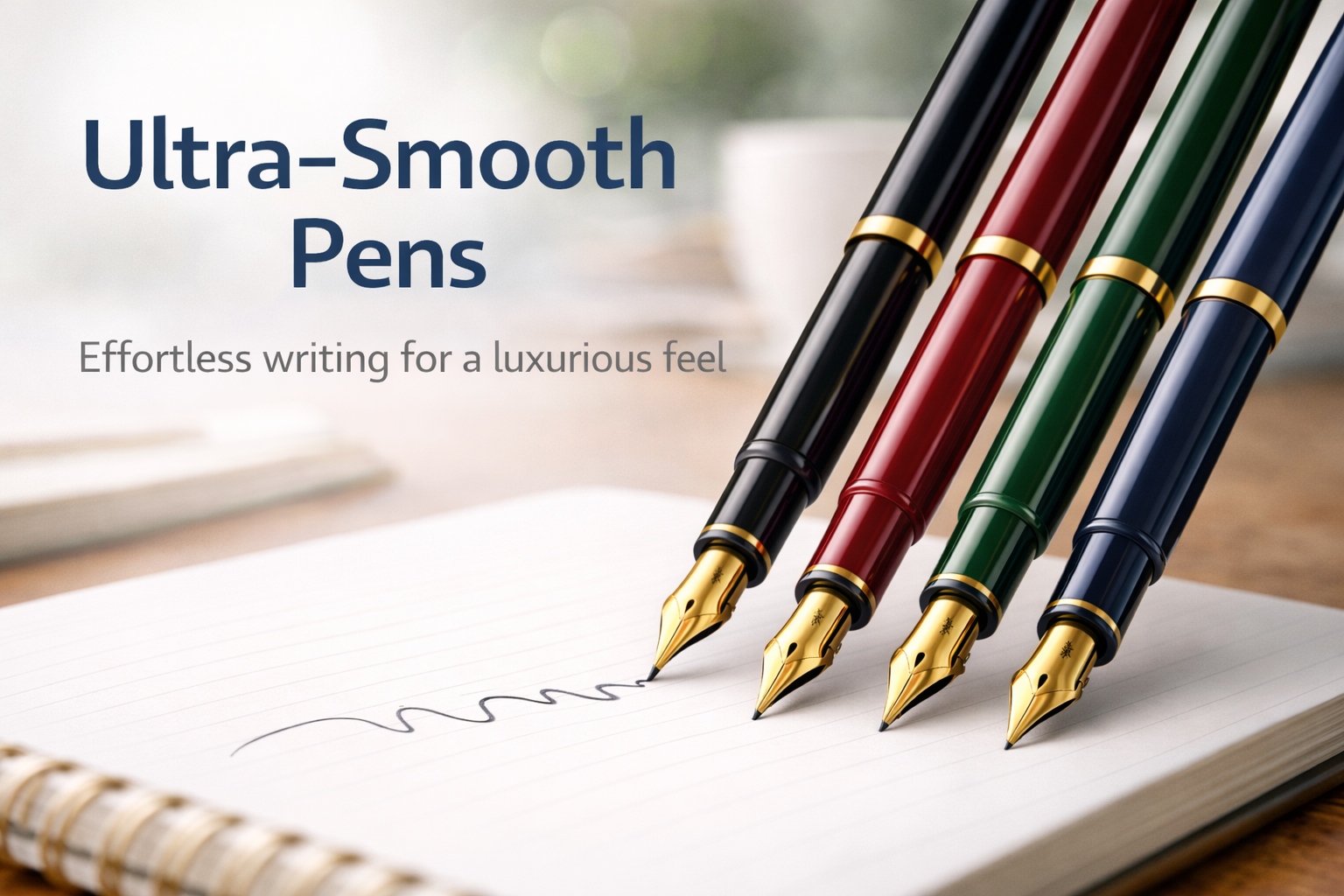
On the other hand, many writers prefer fountain pens with minimal feedback, meaning the nib glides very smoothly across the paper with little to no resistance. These pens feel almost effortless to use, which allows the hand to move faster and more freely. Because there is less friction between the nib and the paper, the hand and fingers do not have to work as hard, making these pens especially comfortable during long writing sessions. This smooth, flowing experience is often described as “luxurious” or “buttery,” giving the impression that the pen is floating across the page. Writers who keep journals, take extensive notes, or write for work or study often choose low-feedback pens because they reduce hand fatigue and make writing feel relaxing rather than demanding. While some people enjoy the control that feedback provides, others value speed and comfort more—neither preference is better than the other. It simply comes down to what feels most enjoyable and natural for each individual writer.
Common Descriptions of Feedback You’ll Hear
Pen enthusiasts often use creative language to describe feedback:
-
“Pencil-like”
-
“Soft feedback”
-
“Pleasant resistance”
-
“Toothy but smooth”
-
“Controlled drag”
These terms usually mean good feedback, not scratchiness.
Can Feedback Change Over Time?
Yes!
Natural Nib Break-In
-
Nibs slowly polish themselves as you write
-
Feedback may decrease slightly with use
Paper and Ink Choices
-
Wet inks feel smoother
-
Dry inks increase feedback
-
Different papers can transform the writing feel
Is Feedback Good for Beginners?
Absolutely.
In fact, many beginners benefit from mild feedback because:
-
It improves control
-
Prevents pressing too hard
-
Helps develop proper technique
A pen that is too smooth can encourage bad habits early on.
How to Know If a Pen’s Feedback Is Right for You
Ask yourself:
-
Do I want control or speed?
-
Do I enjoy feeling the paper?
-
Am I writing for long sessions or short notes?
If possible:
-
Try different nib sizes
-
Write on different papers
-
Test before committing
Final Thoughts
Feedback in fountain pens is not a problem—it’s a personality trait.
Some pens whisper as they glide. Others gently remind you they’re there. The best fountain pen isn’t the smoothest one—it’s the one that feels right in your hand.
Once you understand feedback, you’ll never read pen reviews the same way again.