
Blog
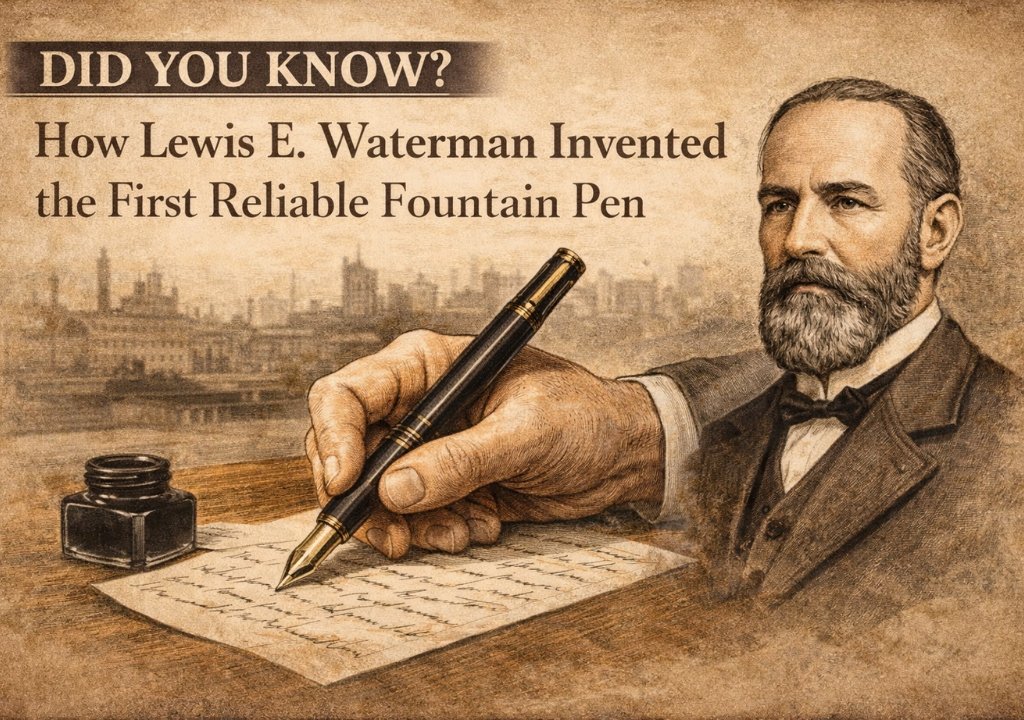
Did You Know? How Lewis E. Waterman Invented the First Reliable Fountain Pen
If you enjoy writing with a fountain pen, you’re benefiting from an invention that changed writing forever—Lewis Edson Waterman’s breakthrough in 1884. Before his design, fountain pens existed, but they were messy, unreliable, and often leaked at the worst possible moments. So what exactly did Waterman invent—and why is his innovation still relevant today? Let’s break it down in a simple, easy-to-understand way.
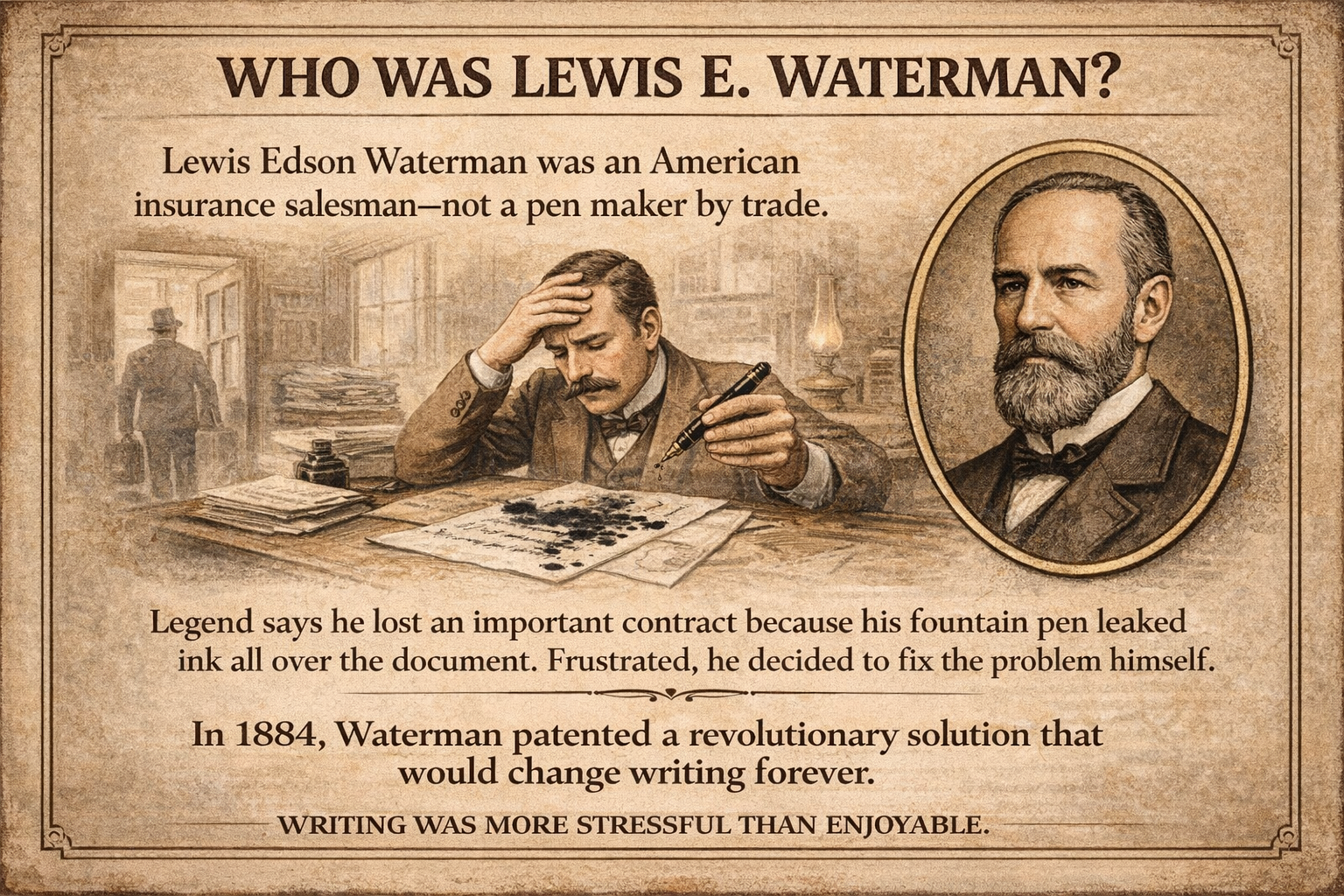
Who Was Lewis E. Waterman?
Lewis Edson Waterman was an American insurance salesman not a pen maker by trade. Legend says he lost an important contract because his fountain pen leaked ink all over the document. Frustrated, he decided to fix the problem himself. In 1884, Waterman patented a revolutionary solution that would change writing forever.
The Problem with Early Fountain Pens
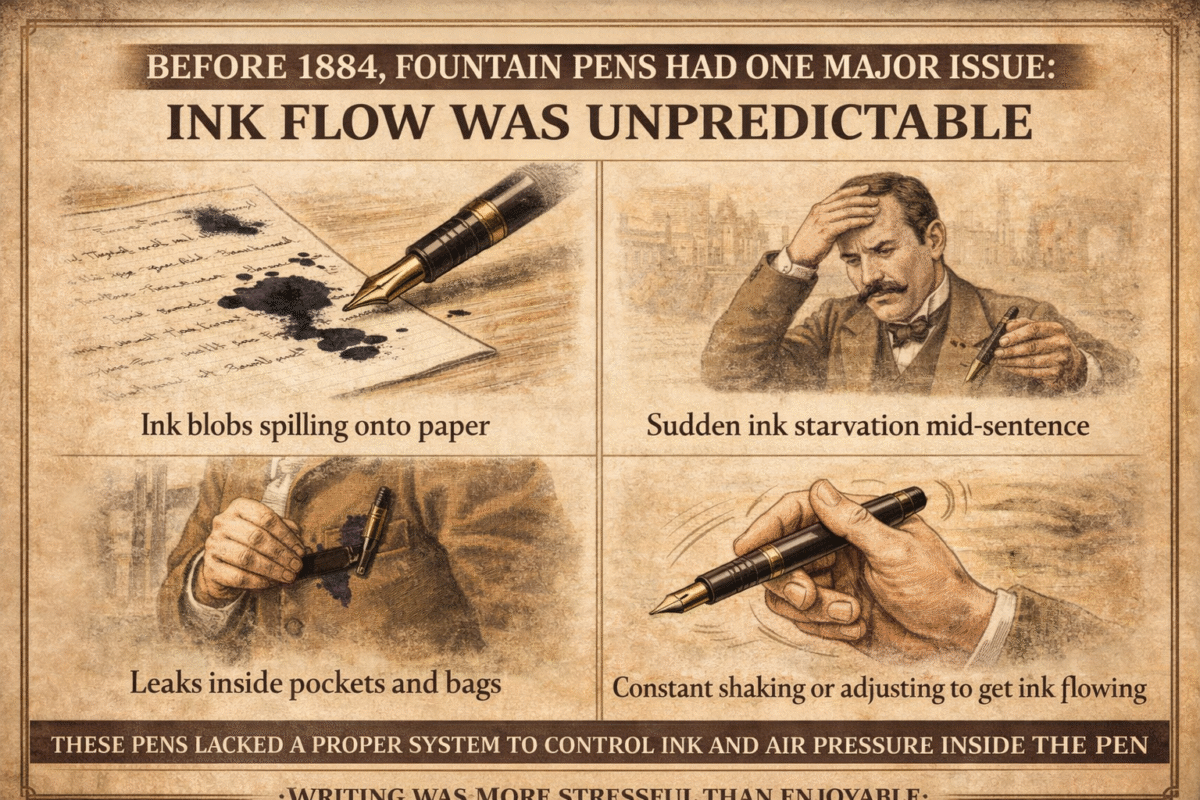
Before 1884, fountain pens had one major issue: ink flow was unpredictable.
Writers commonly faced:
Ink blobs spilling onto paper
Sudden ink starvation mid-sentence
Leaks inside pockets and bags
Constant shaking or adjusting to get ink flowing
These pens lacked a proper system to control ink and air pressure inside the pen.
Writing was more stressful than enjoyable.
The Big Innovation: A Truly Reliable Ink Feed
Waterman introduced the three-channel ink feed system, which solved the ink-flow problem scientifically.
How It Worked
One channel carried ink to the nib
Two channels allowed air to flow back into the ink reservoir
This balanced air pressure inside the pen
Why This Was a Game-Changer
Ink flowed smoothly and consistently
No sudden leaks or blobs
No skipping or drying mid-stroke
Writing became clean, controlled, and reliable
This was the first fountain pen practical enough for daily use.
Even today, more than a century after its invention, Lewis E. Waterman’s ink feed design continues to shape how modern fountain pens work. Every quality fountain pen you use—whether entry-level or luxury—relies on the same core principle Waterman perfected in 1884: controlled ink flow balanced with air intake. Modern pens use precision-engineered feeds made from ebonite or advanced plastics, designed to regulate ink delivery through capillary action while allowing air to travel back into the ink reservoir. This balance prevents common issues such as ink flooding, skipping, or sudden dryness, ensuring a smooth and consistent writing experience. The nib and feed work together as a system, delivering just the right amount of ink to the paper with every stroke. Renowned brands like Waterman, Parker, Montblanc, Pelikan, Sailor, and Pilot have refined materials and manufacturing techniques over the years, but the fundamental science behind their reliable performance remains unchanged. In essence, every modern fountain pen—no matter how advanced—still carries the DNA of Waterman’s original innovation, proving how timeless and revolutionary his design truly was.
Lewis E. Waterman didn’t just invent a pen—he invented trust in fountain pens. Without his design, fountain pens might have disappeared entirely.
Final Thoughts
Lewis E. Waterman’s 1884 ink feed design wasn’t just an improvement—it was a revolution.
It made fountain pens reliable, practical, and enjoyable, paving the way for the writing instruments we cherish today.
If you love fountain pens, you’re writing history with every word.